
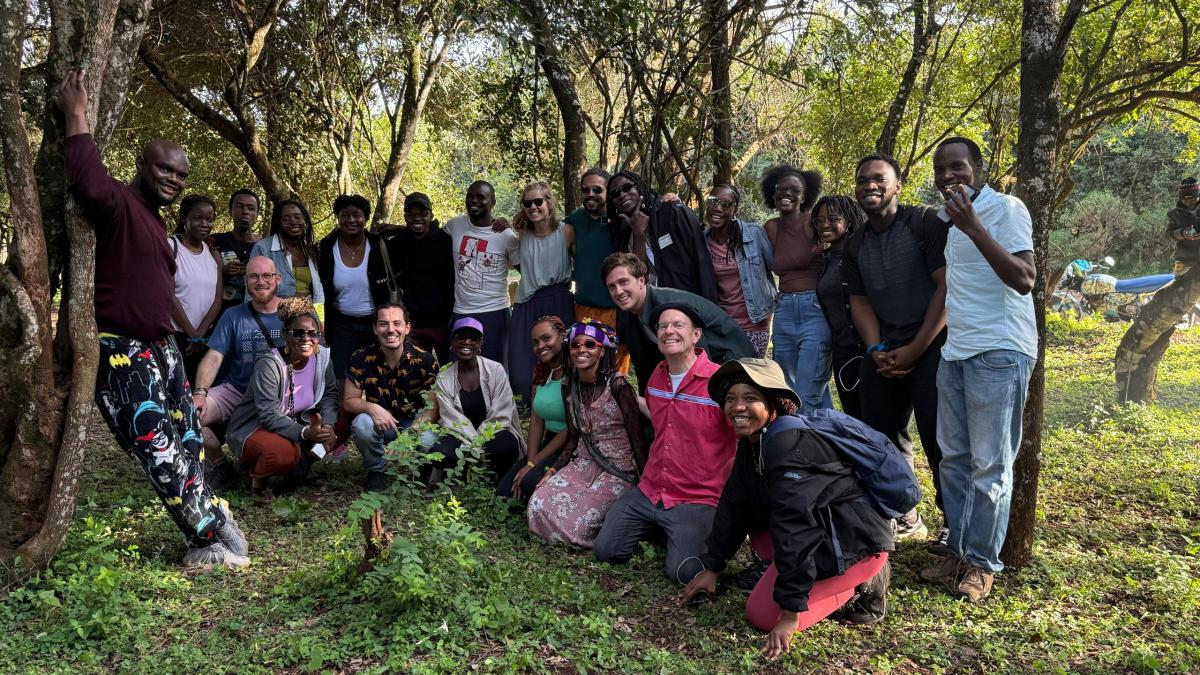
‘Trash is there; let’s remove it.’ With this simple yet profound mantra, Biodun launched the EcoRave initiative on December 24, 2024, at River Kandisi in Ololua Forest, Ngong, Kenya. His vision rallied over forty-one volunteers from diverse backgrounds, bound by a shared purpose: to clean river Kandisi.
A Vision Takes Root
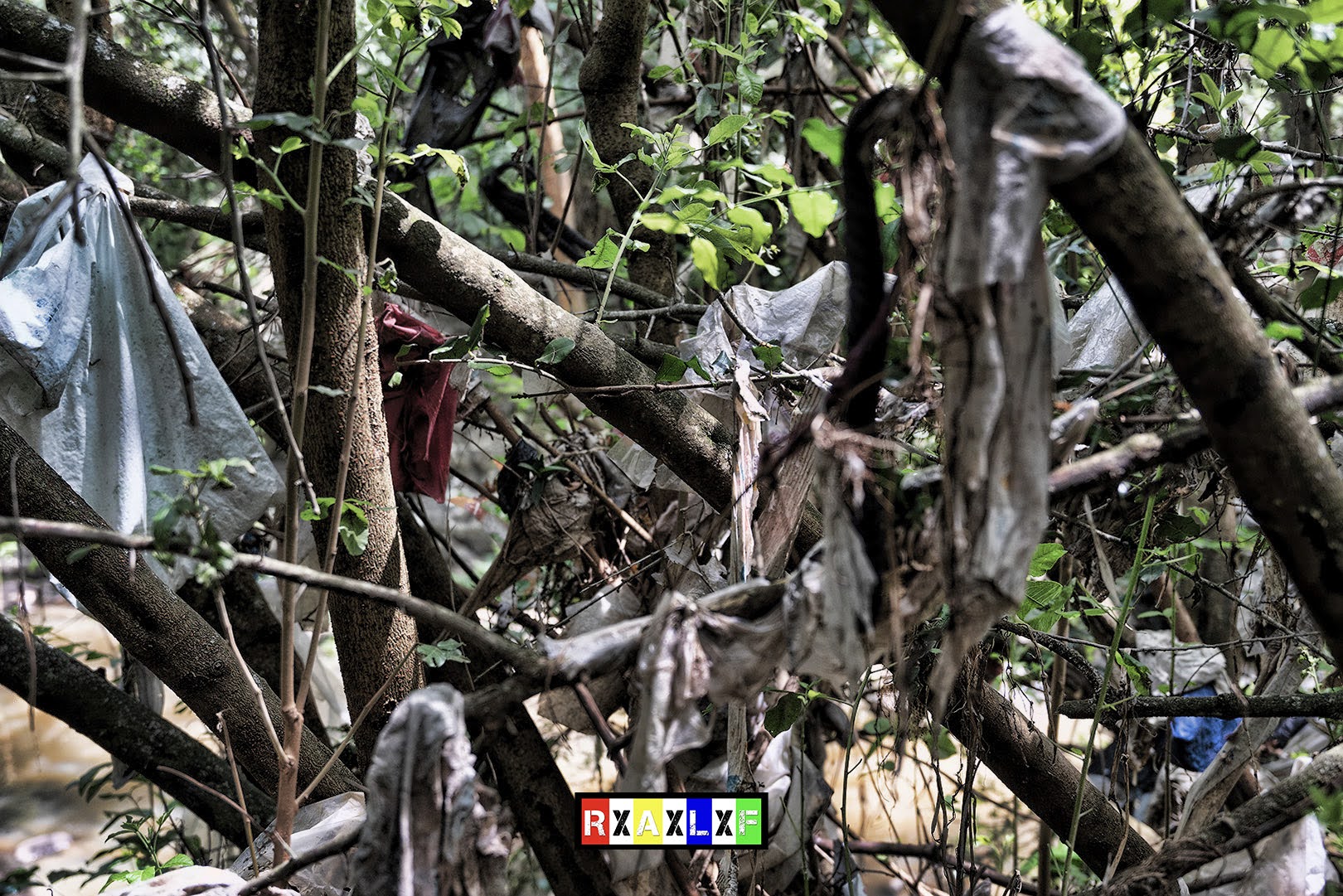
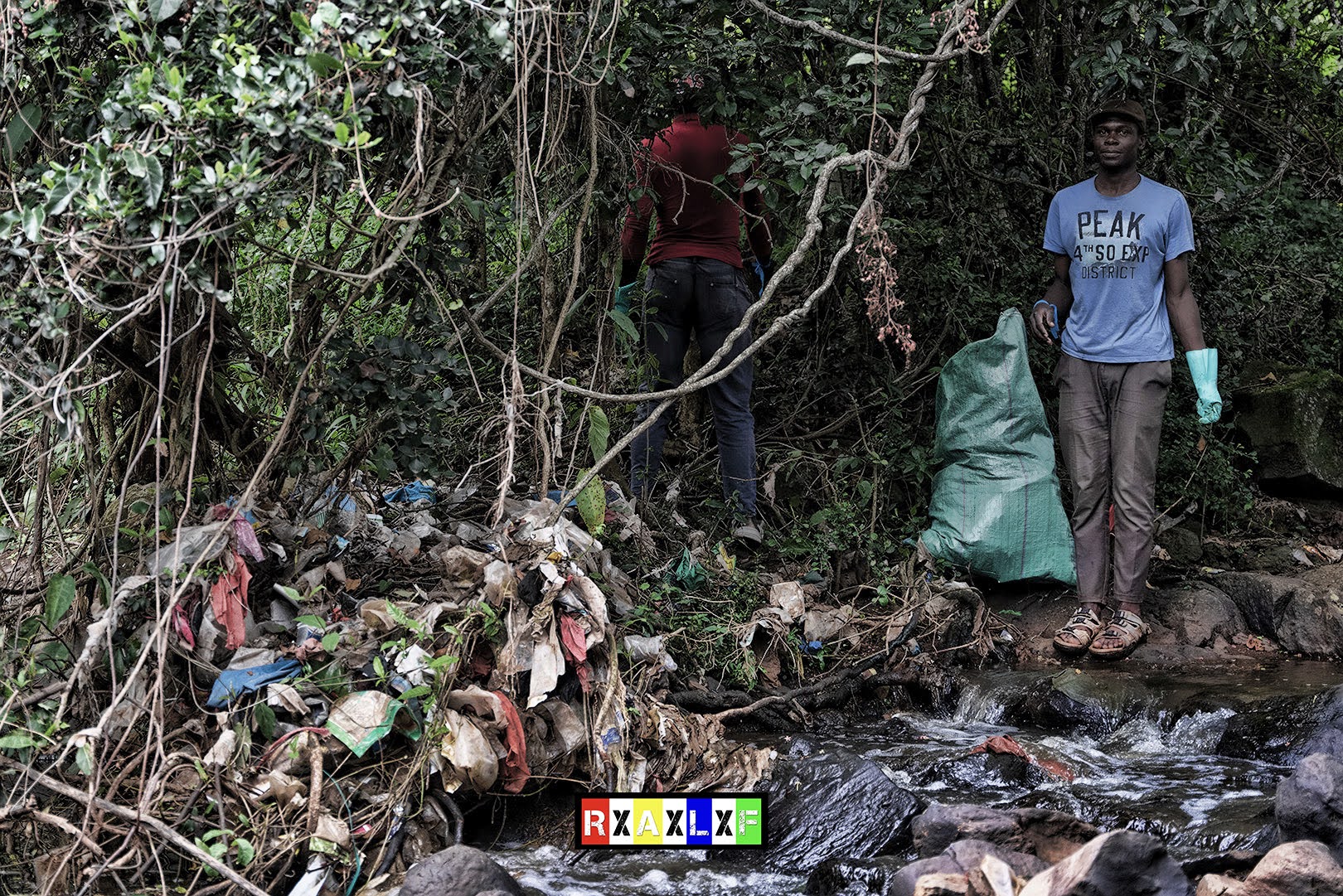
I first learned about the initiative during an impromptu hike with Mike in Ololua Forest. As we stopped by the river, Mike casually mentioned, ‘Biodun wants to clean this river.’ In awe, I surveyed the scene: plastics in different forms clung to tree branches, polyethylene bags hung precariously, and other pollutants lay buried under layers of mud or shimmered in the water. The faint smell of decay hung in the air, mingling with the earthy scent of the forest. The sight was sobering. Yet, knowing Biodun, it wasn’t surprising.
Biodun Chidi Chris—Nigerian, from Kogi State in the North Central region of the country—is a man of boundless energy and an even bigger heart. I have never asked him about the origins of the name ‘Chidi,’ but I imagine he’d say he adopted it simply because he liked it. He’s always set apart by his vibrant personality. Biodun is a friend to all, regardless of religion, tribe, or race, and everyone who knows him recognises him as someone who consistently gives more of himself.
My second time at the river was the following week with the boys — Mike, Gideon, Arinze, and Deolu. Arinze and Deolu had come to spend the holidays with Biodun. After another exhilarating hike, we stood before the river once more. Tense with energy, we felt nervicited upon discovering that the Ololua Forest, which I always looked forward to hiking, was a hyena den. This time, the conversation turned to Biodun’s ambitious plan. Deolu, documenting the moment, repeated what Mike had said, ‘This is the river Biodun is going to clean.’ Pride lit up his voice. I felt proud too.
Behind the scenes, Biodun was leaving the house early, meeting with the Ololua community, rallying volunteers, and securing permissions for this mission which he had embraced with vigour. ‘I’m going to clean it on my birthday,’ he declared. Fresh from a trip to Nigeria for a friend’s wedding, he barely stayed in the house, and one night, after being out for hours, returned excited and dirty. He had gone to meet the chief of Ololua to seek permission for the cleanup and connected with someone higher-up, who ultimately gave him the go-ahead.
Biodun’s determination was infectious, and the mission was clear: clean River Kandisi, not just for today but for the future. But why does he care whether the river was clean or not?
When I asked him why he needed to do this in Kenya, as someone who isn’t originally from here, he responded immediately, as though shocked that I’d even think to ask the question: ‘It’s not about the place—I can do it anywhere.’
The Day of Action
‘It’s very simple.
It’s just like, trash is there; let’s remove it.
And I was lucky to be part of Kairos Futura, where they had a Hakuna Utopia workshop about imagining a perfect world around you, and when I thought of something that could be perfect and it’s not perfect, I thought of the forest, the river. I’ve been there many times, and how it looks, and I thought, “oh, this can look better.”‘— Biodun Chidi Chris, commenting on what motivated the EcoRave initiative.
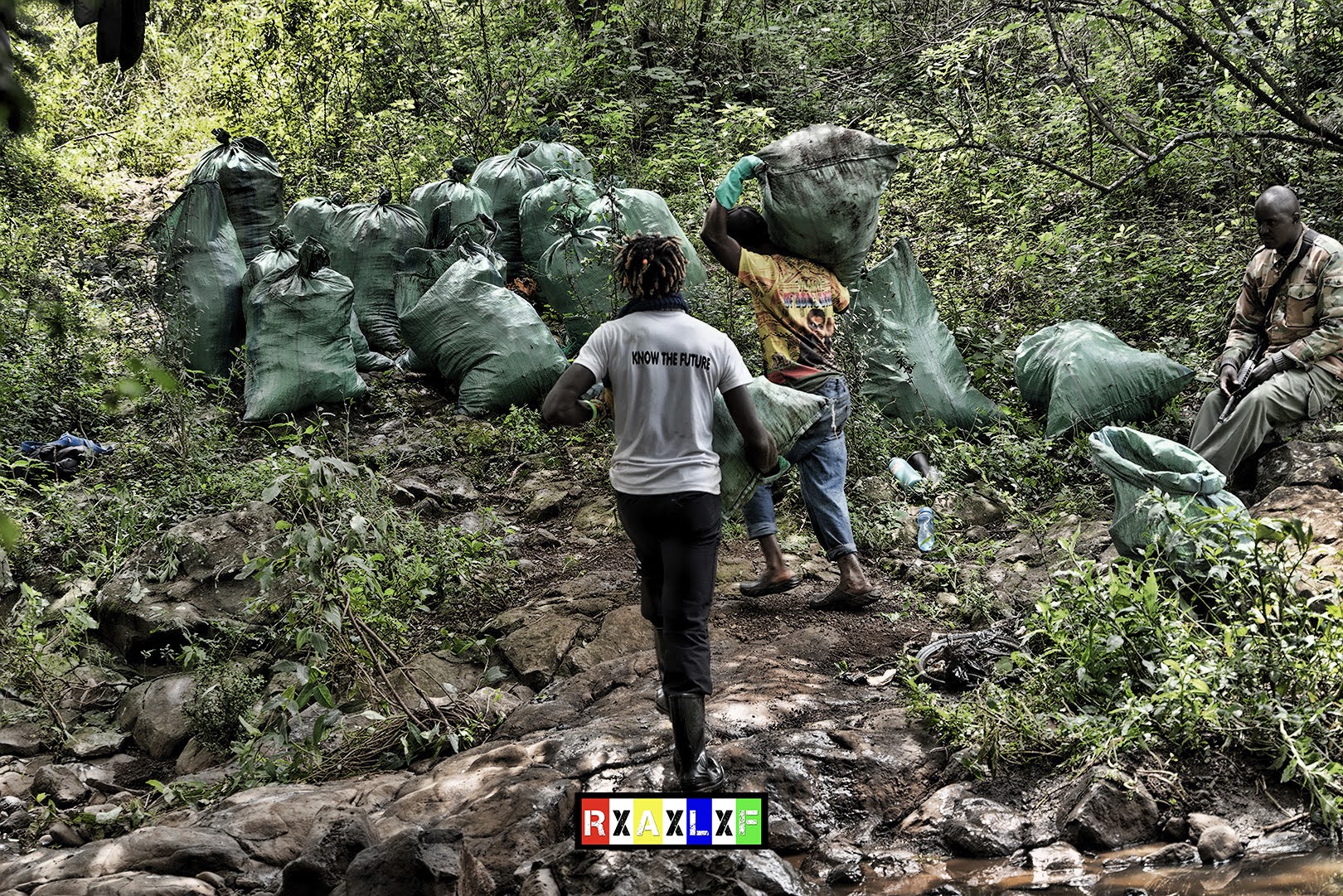
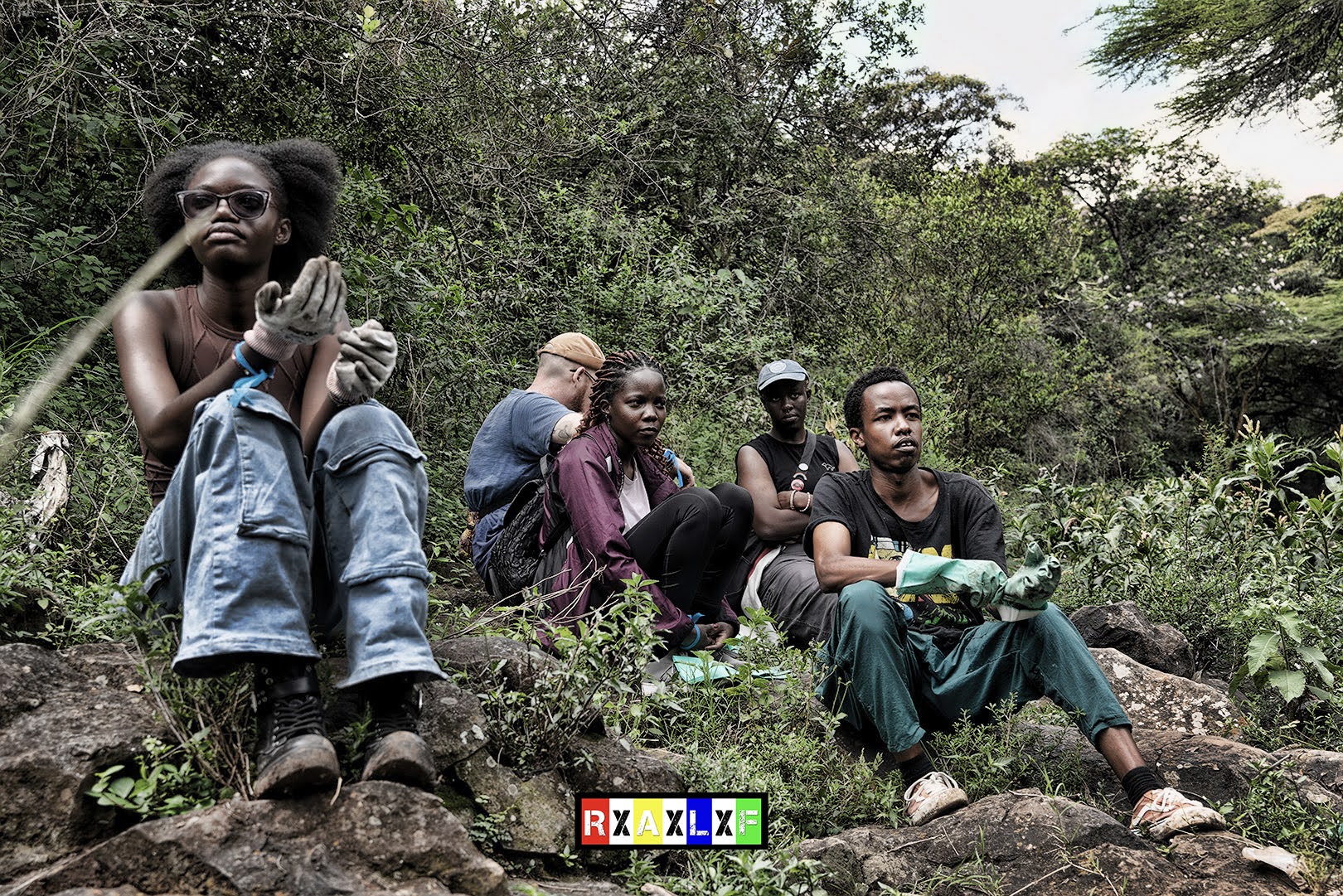
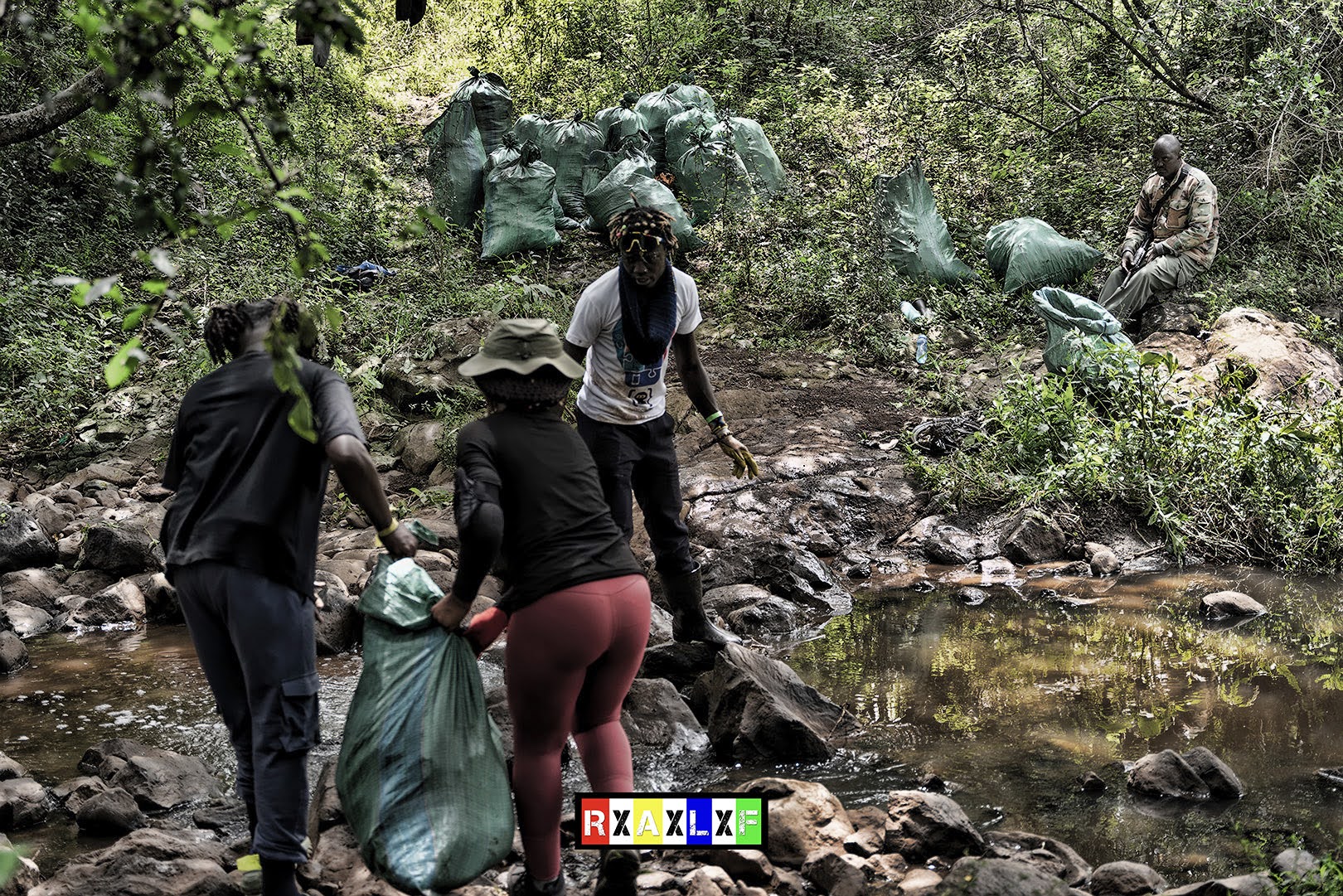
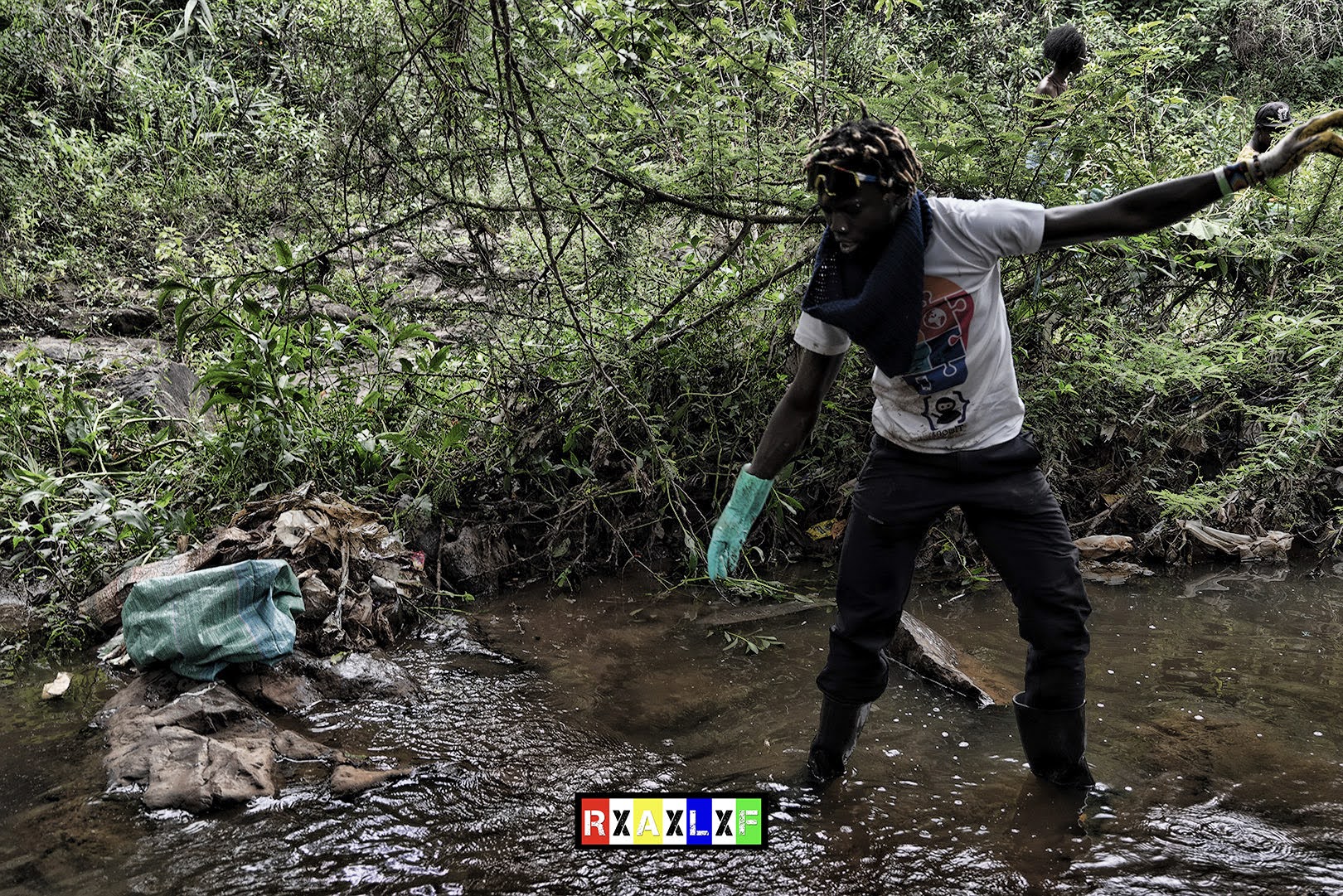
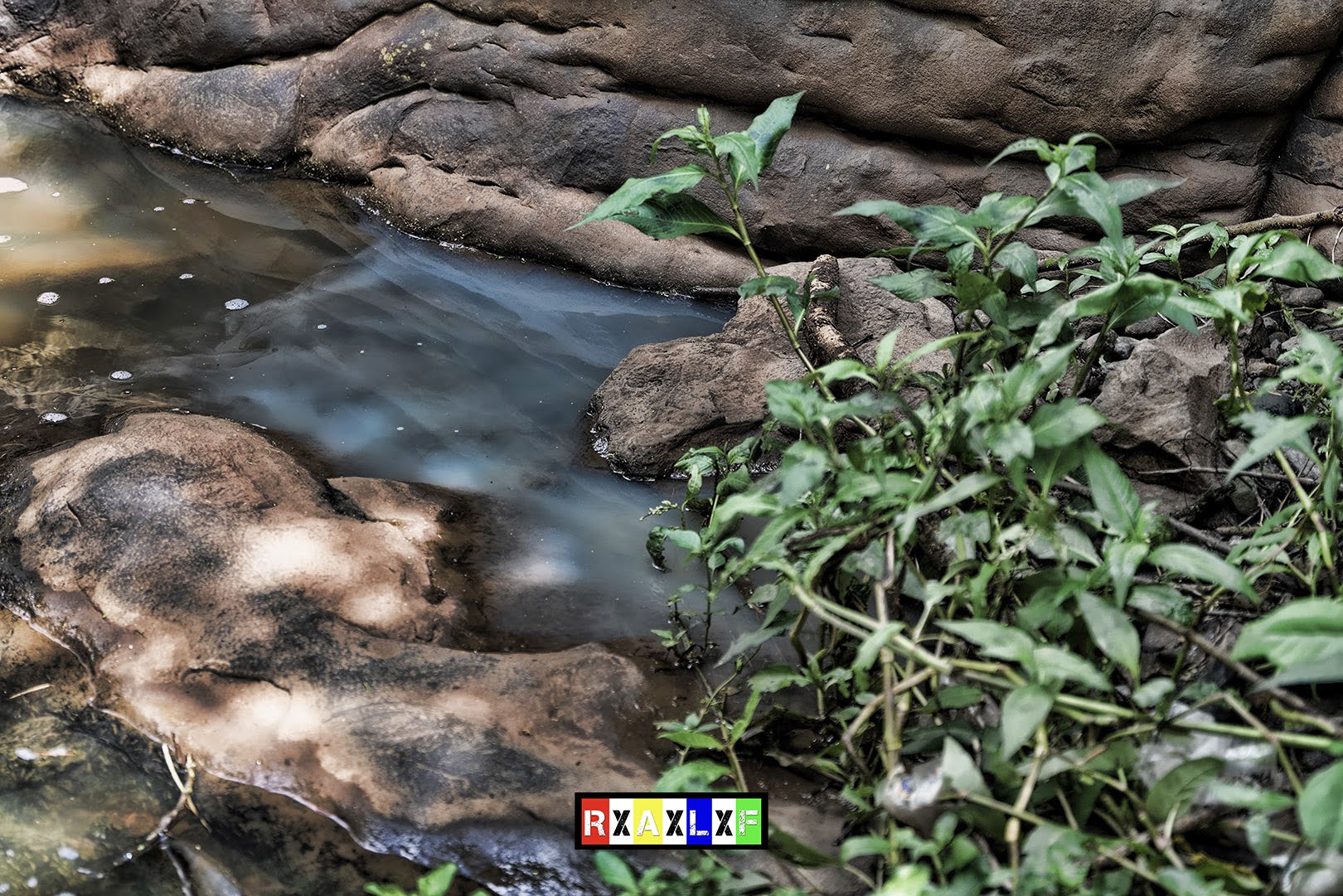
Photograph by RxAxLxF
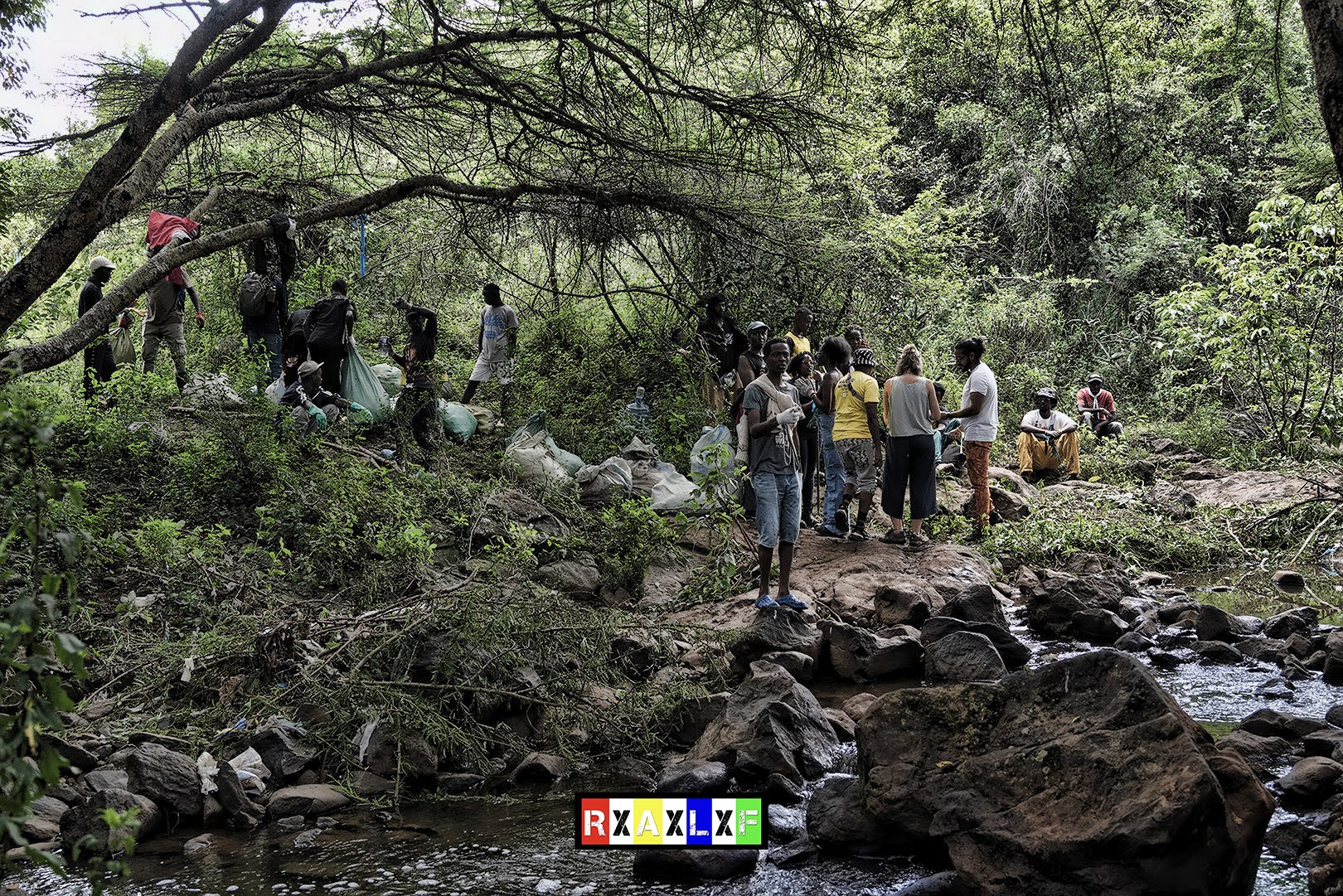
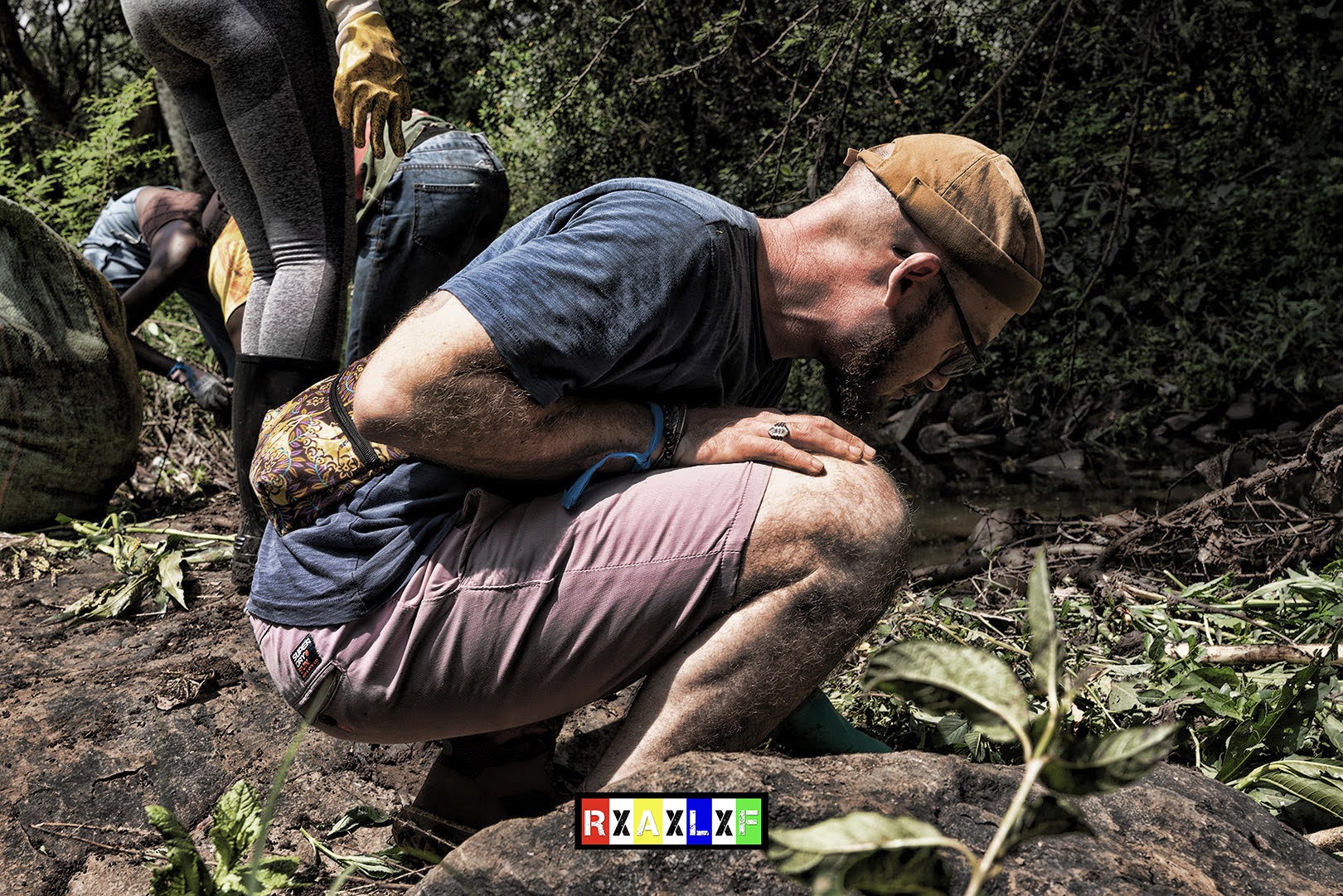
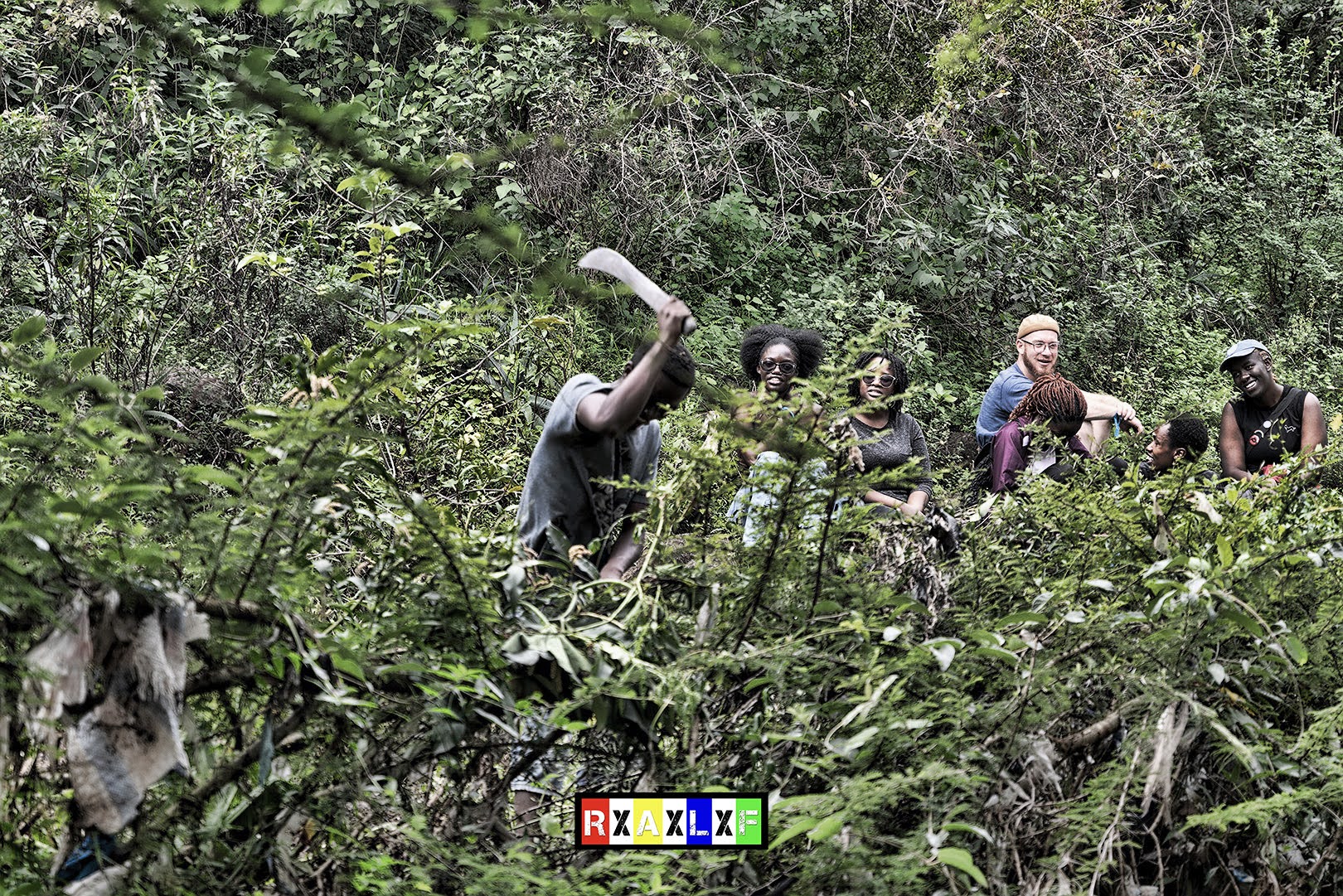
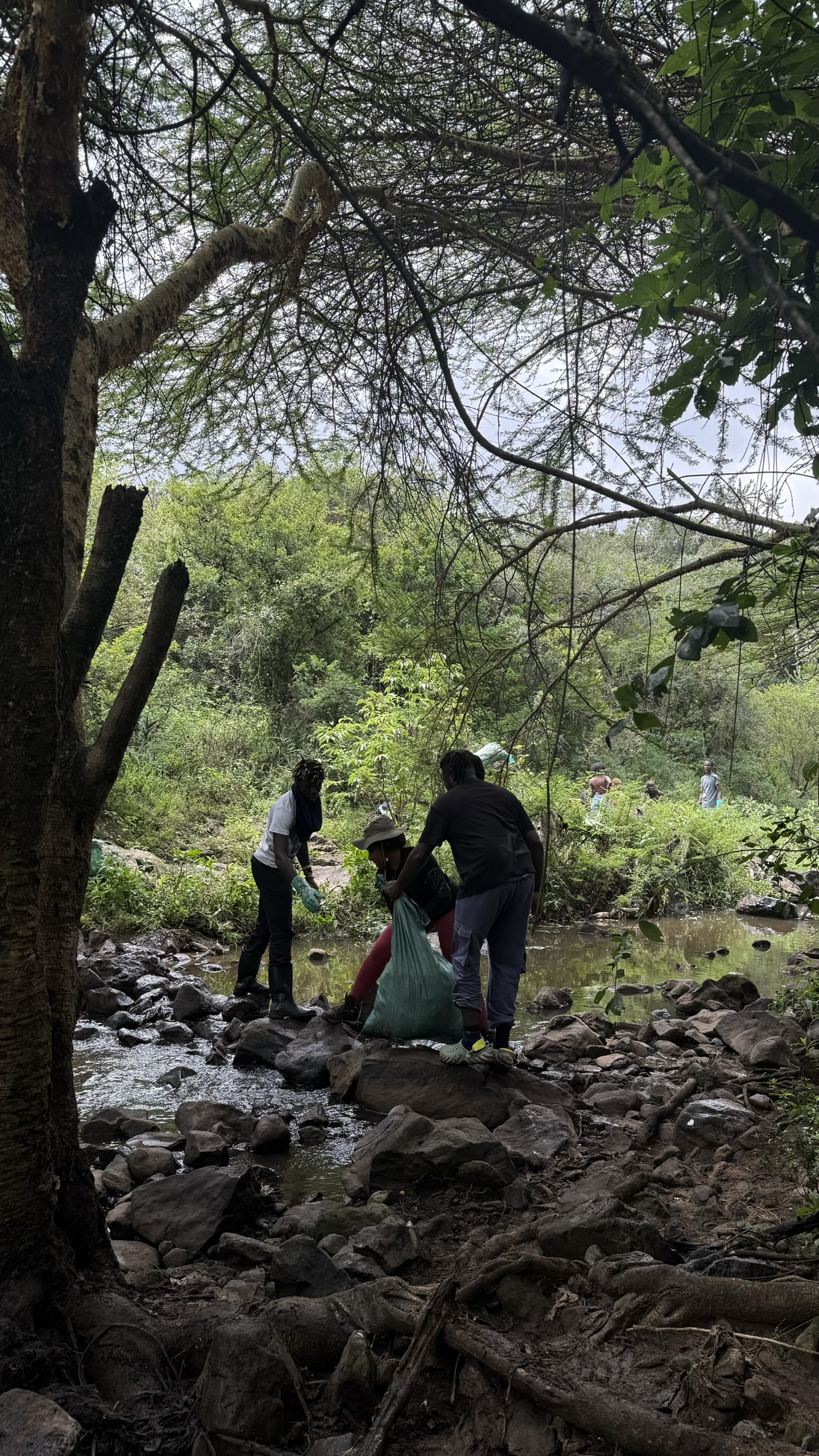
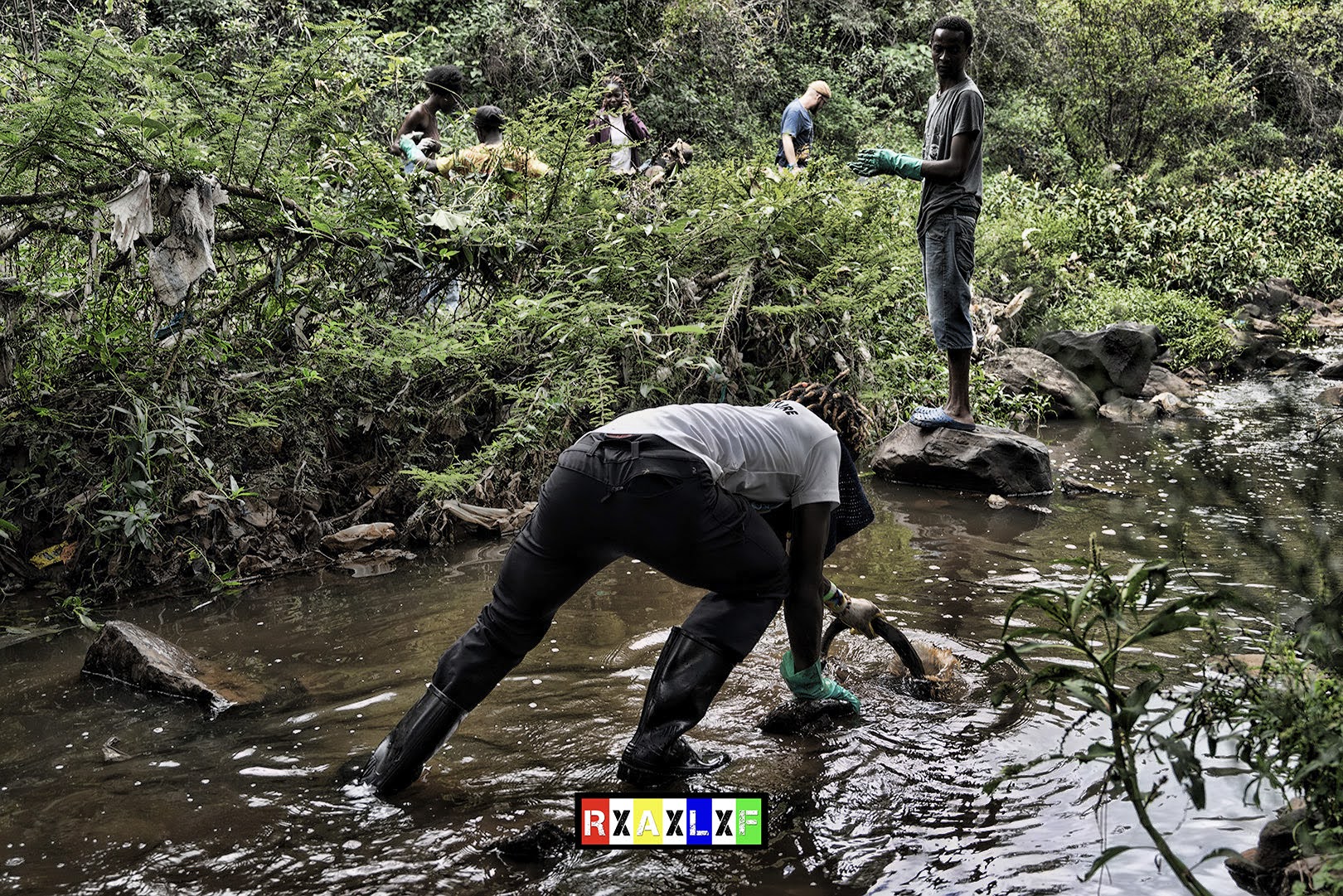
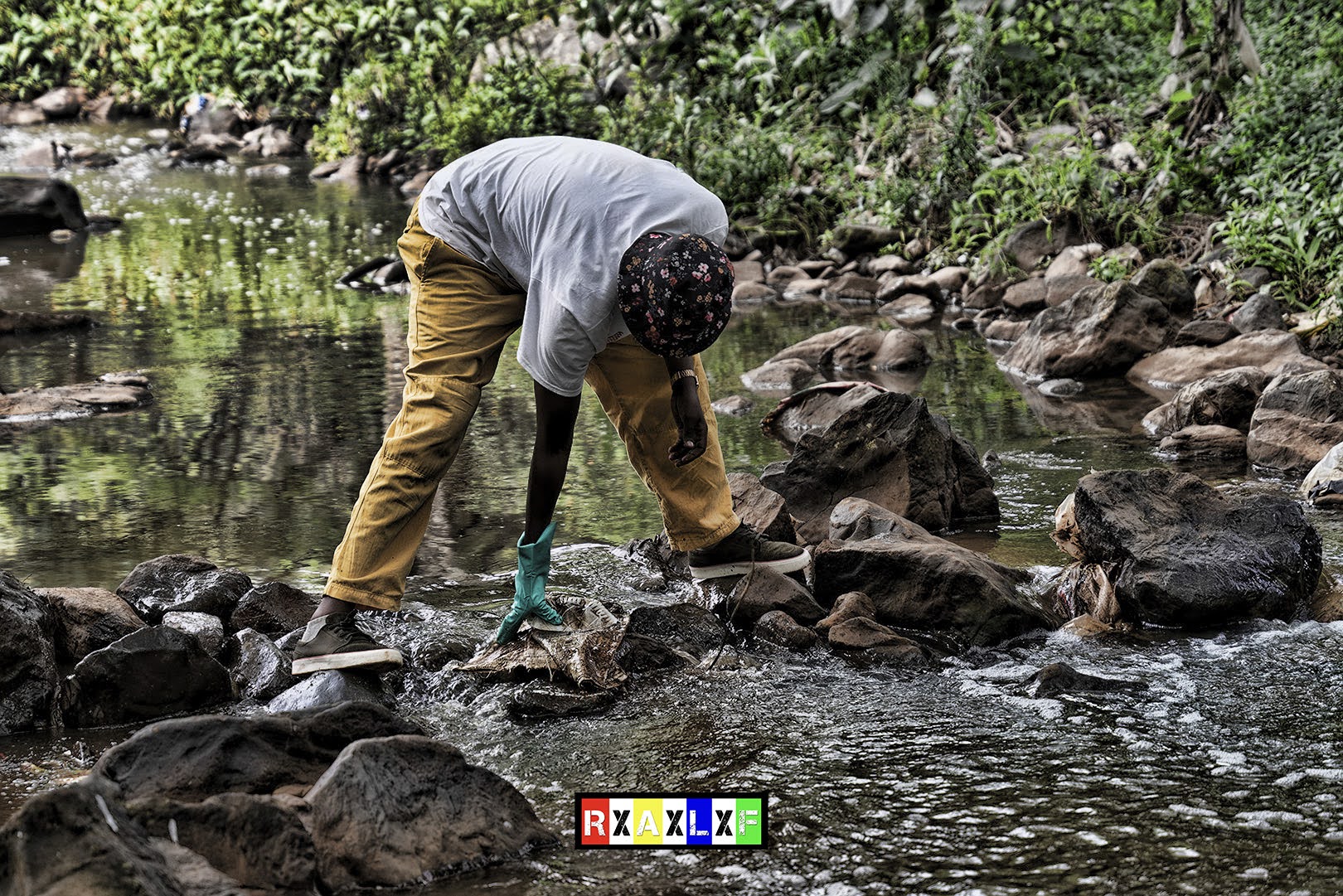
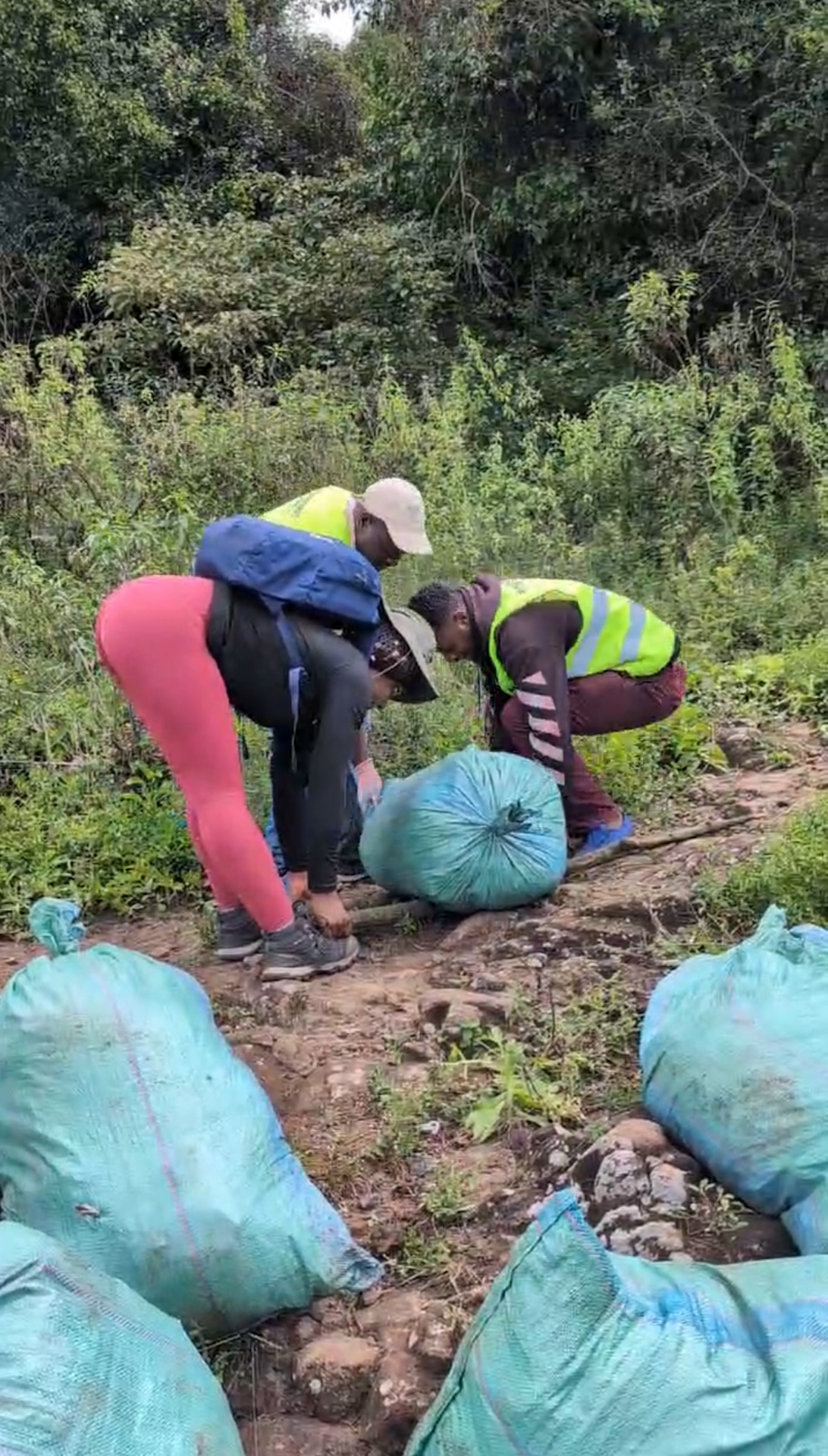
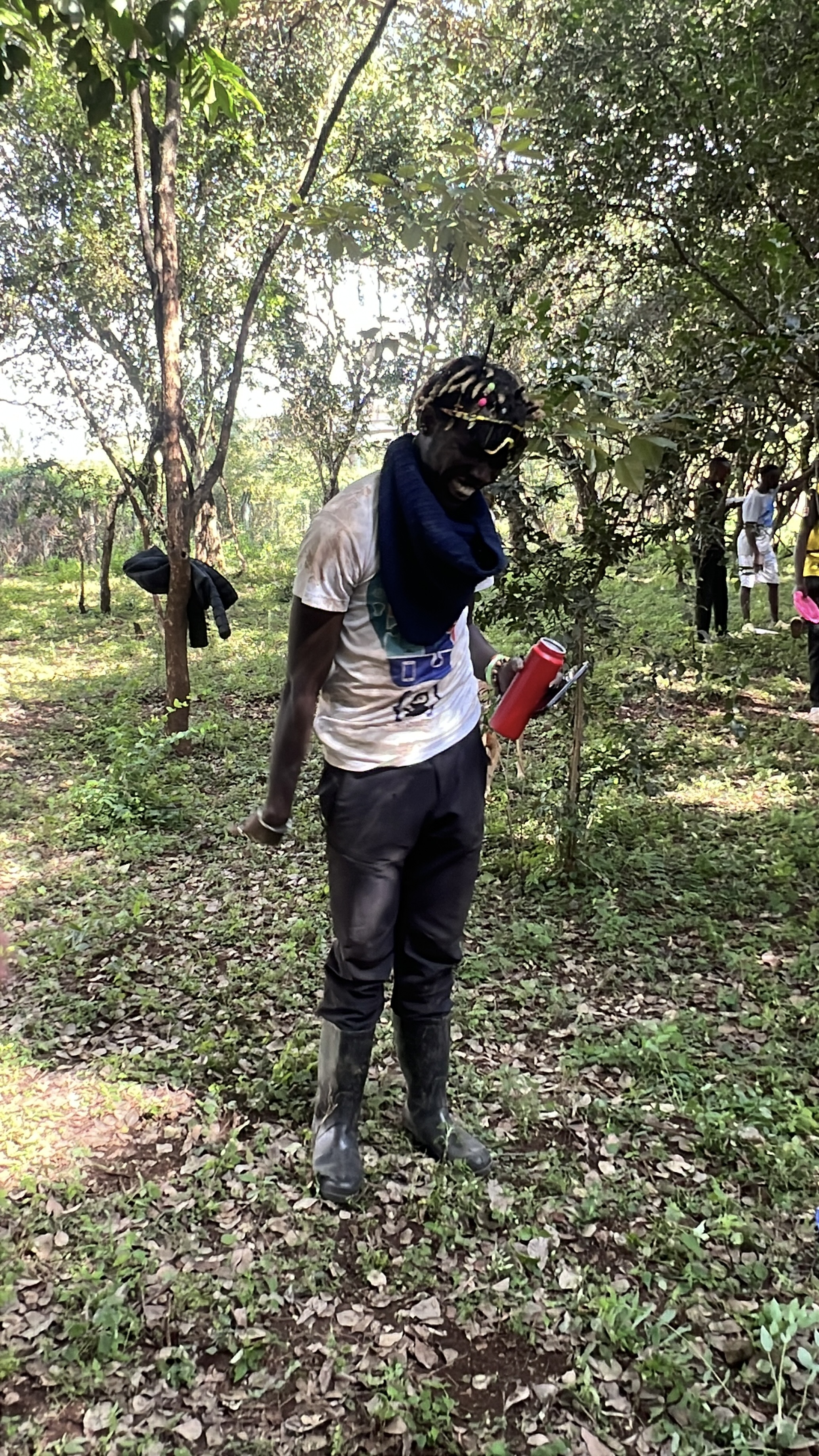
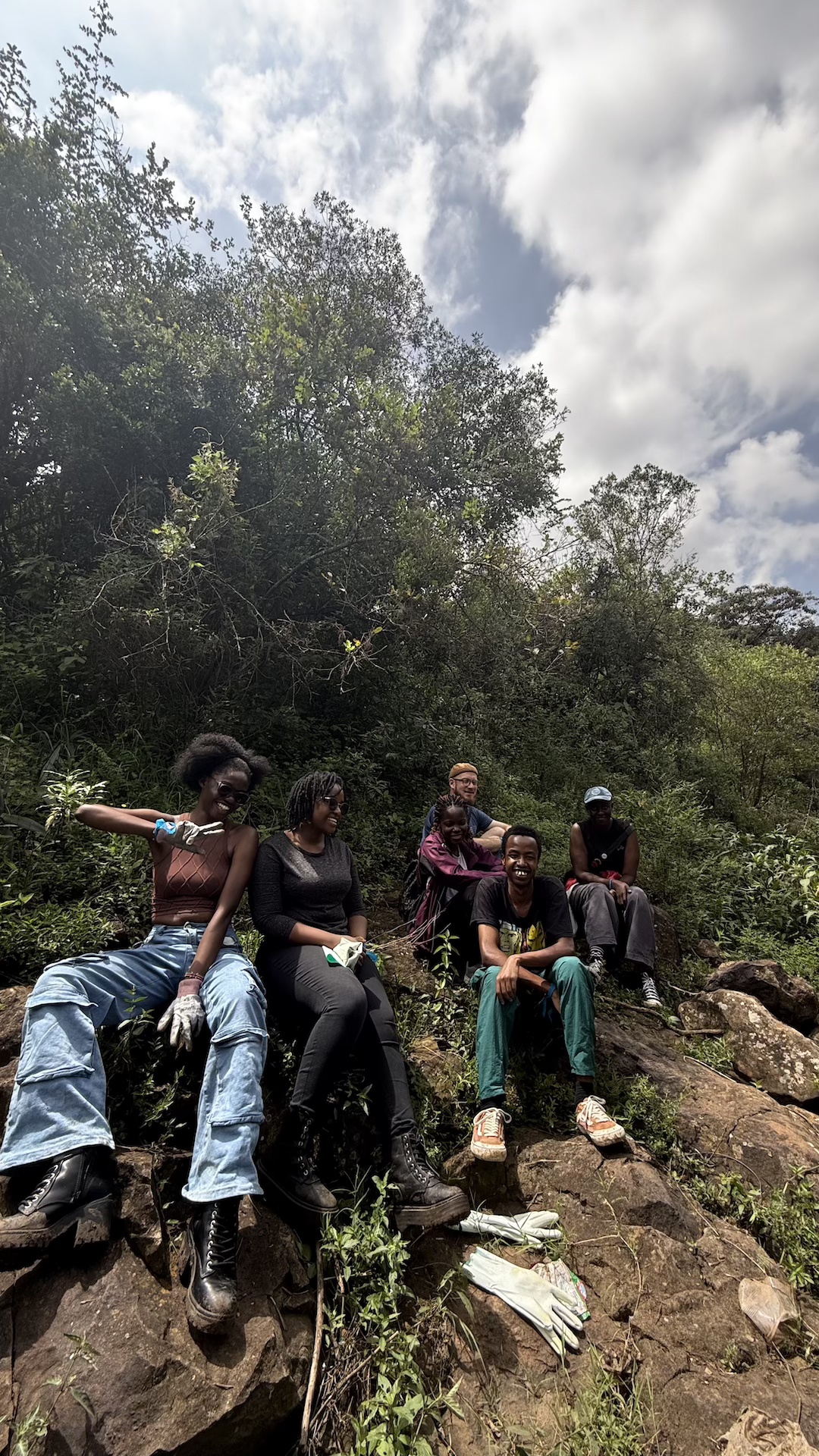
On the day of the cleanup, I arrived with the second batch of volunteers. By 11:00 AM, volunteers were already hard at work: cleaning, clearing, and led by Biodun. You couldn’t miss him; he was at the forefront in all his bearing, knee-deep in the river, cutting plastics from the banks and stuffing trash into sacks.
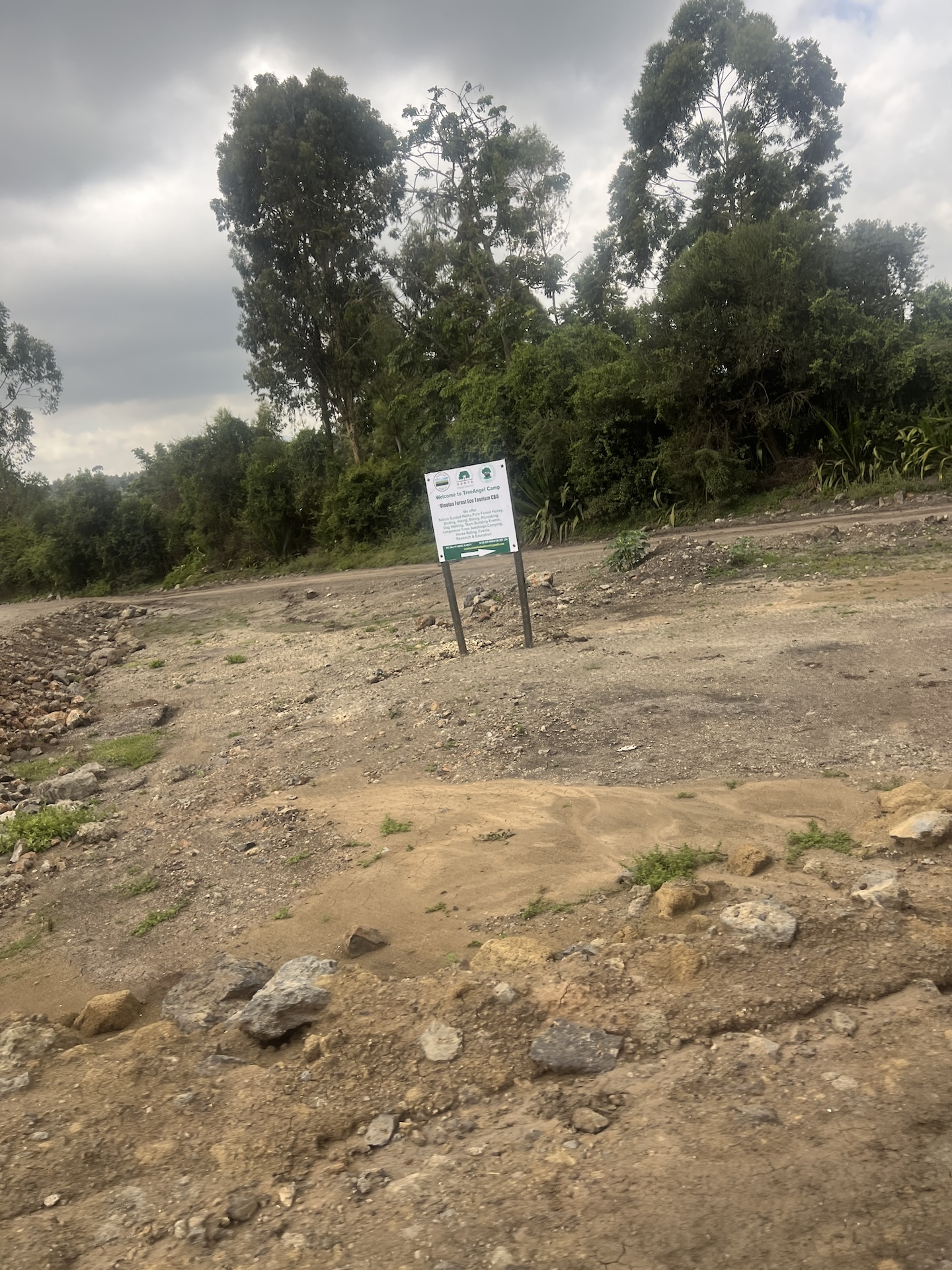
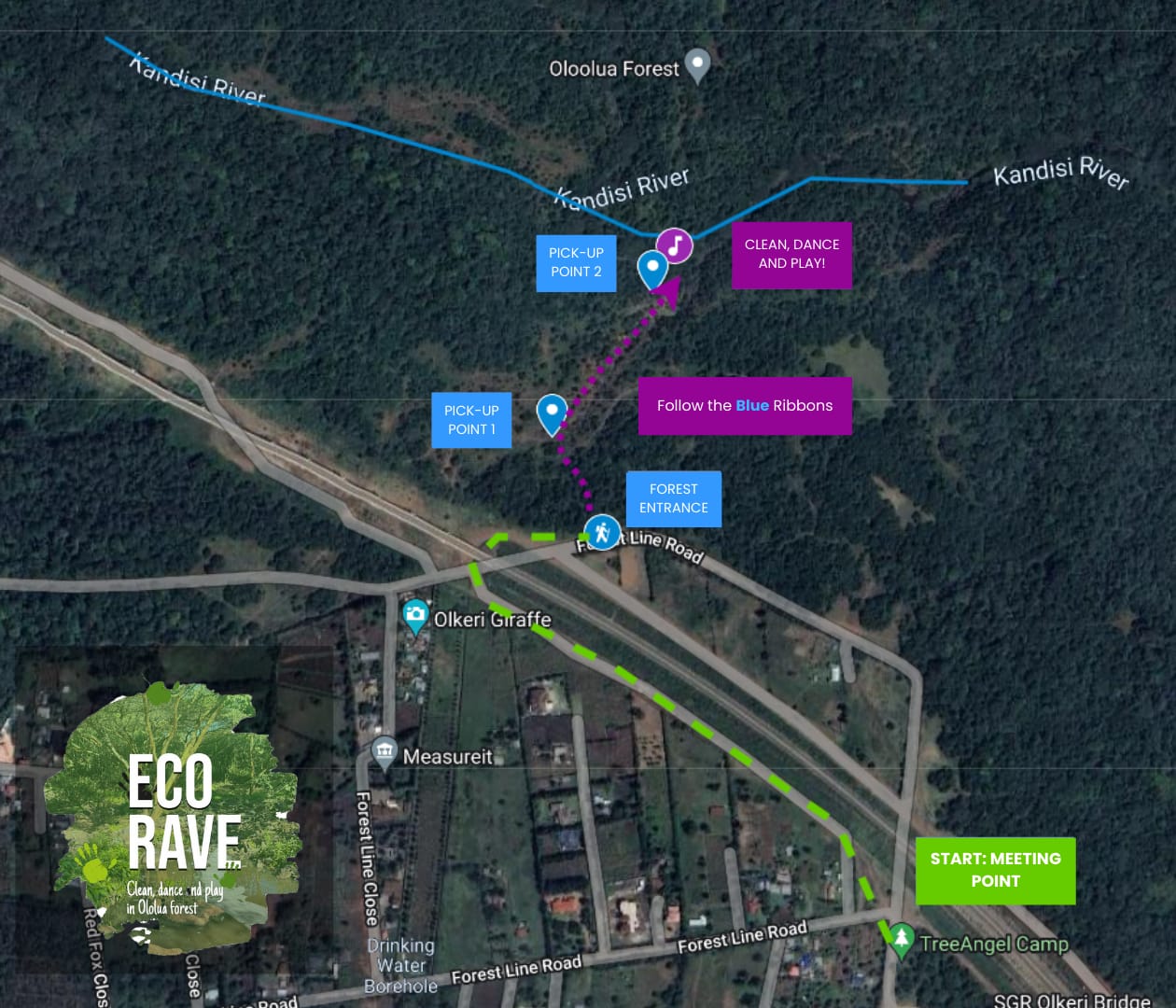
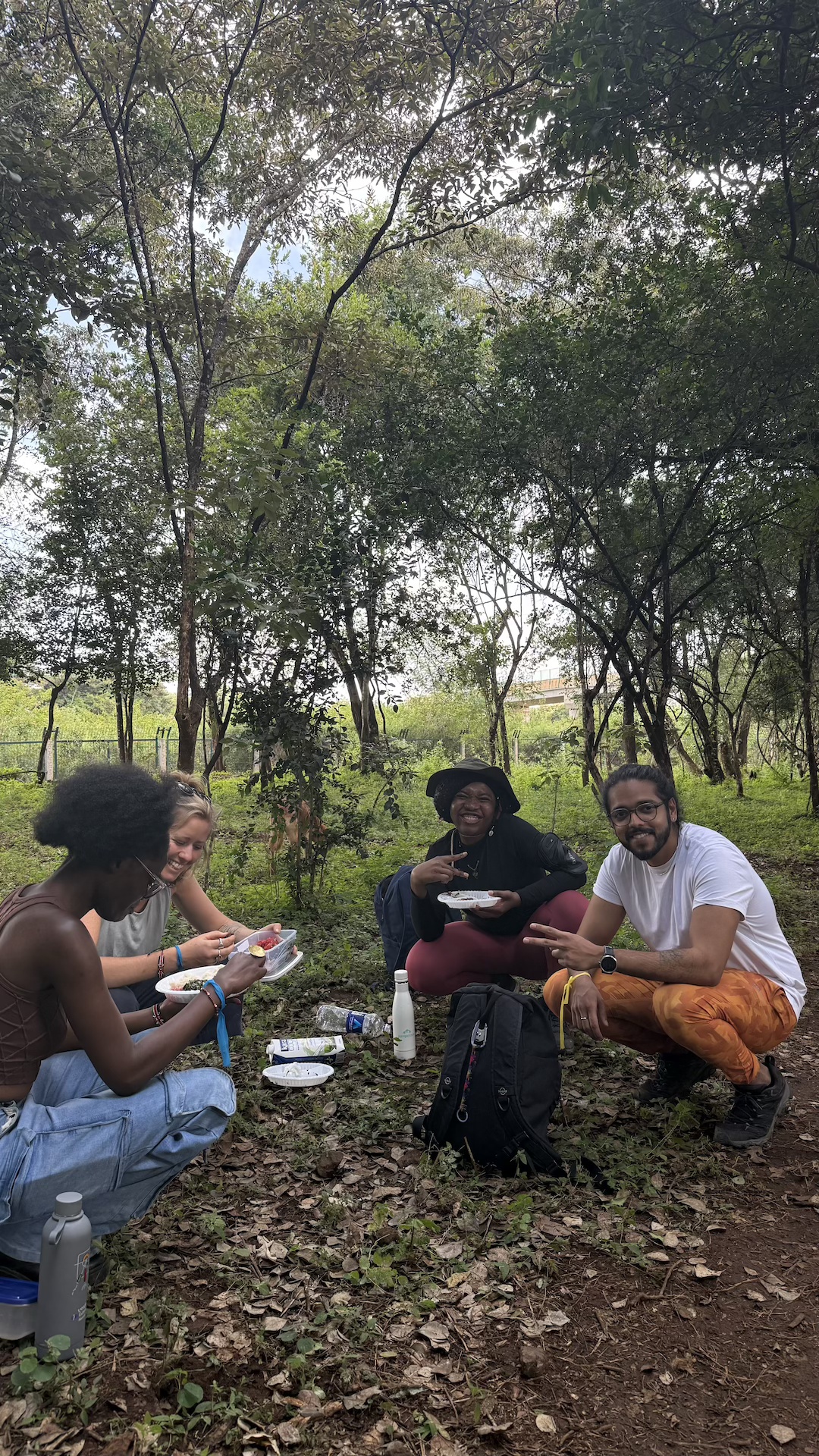
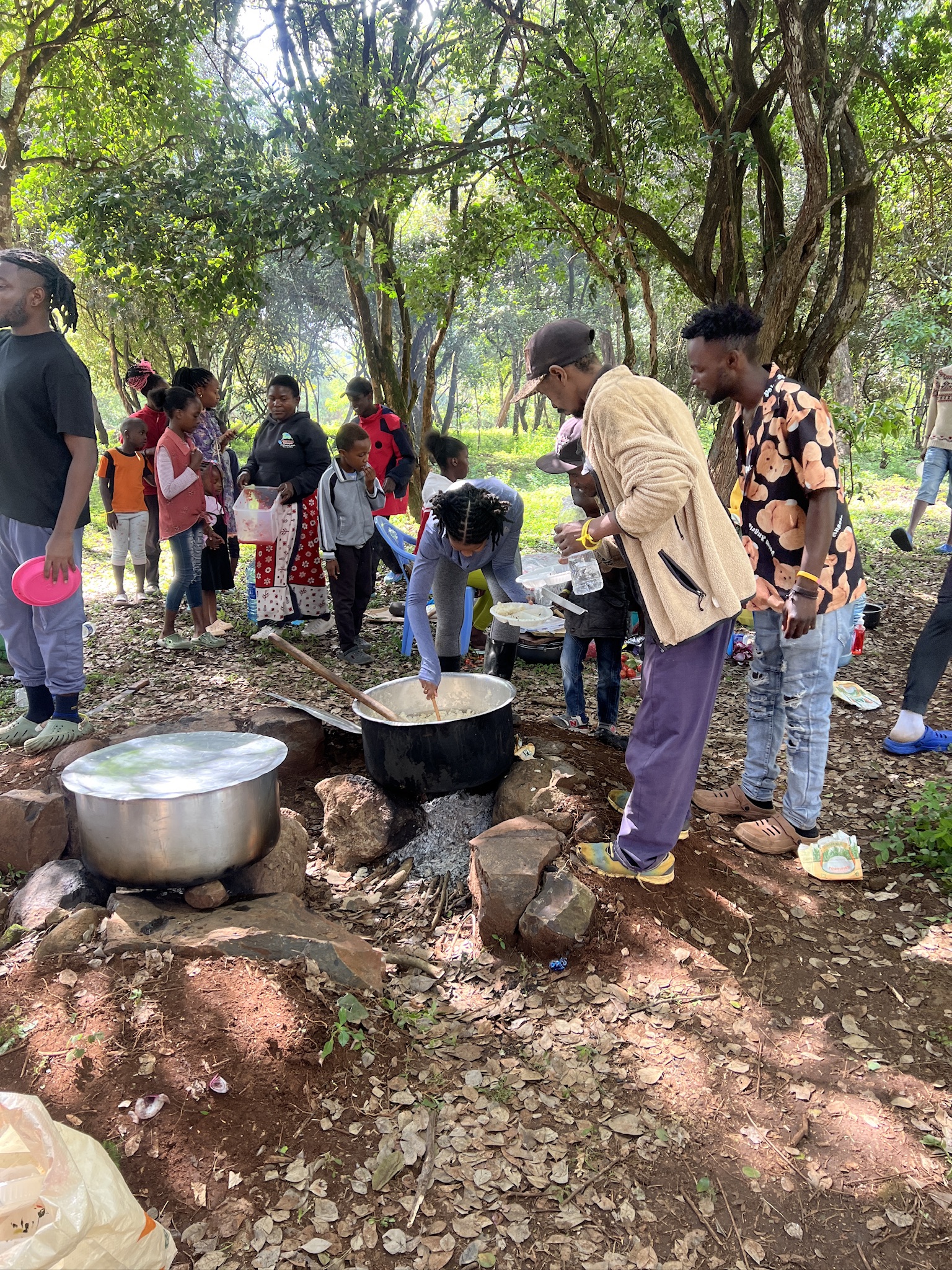
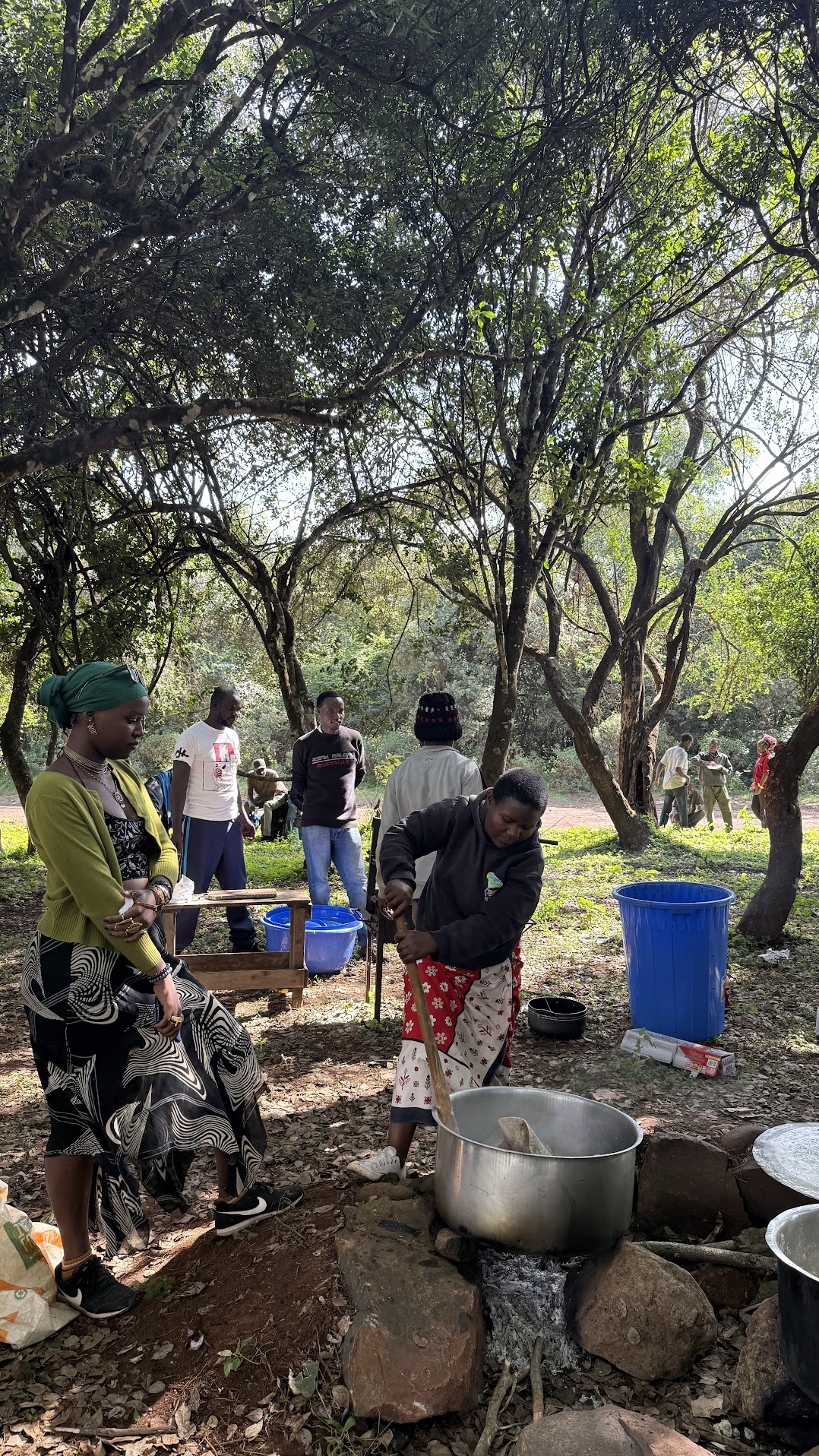
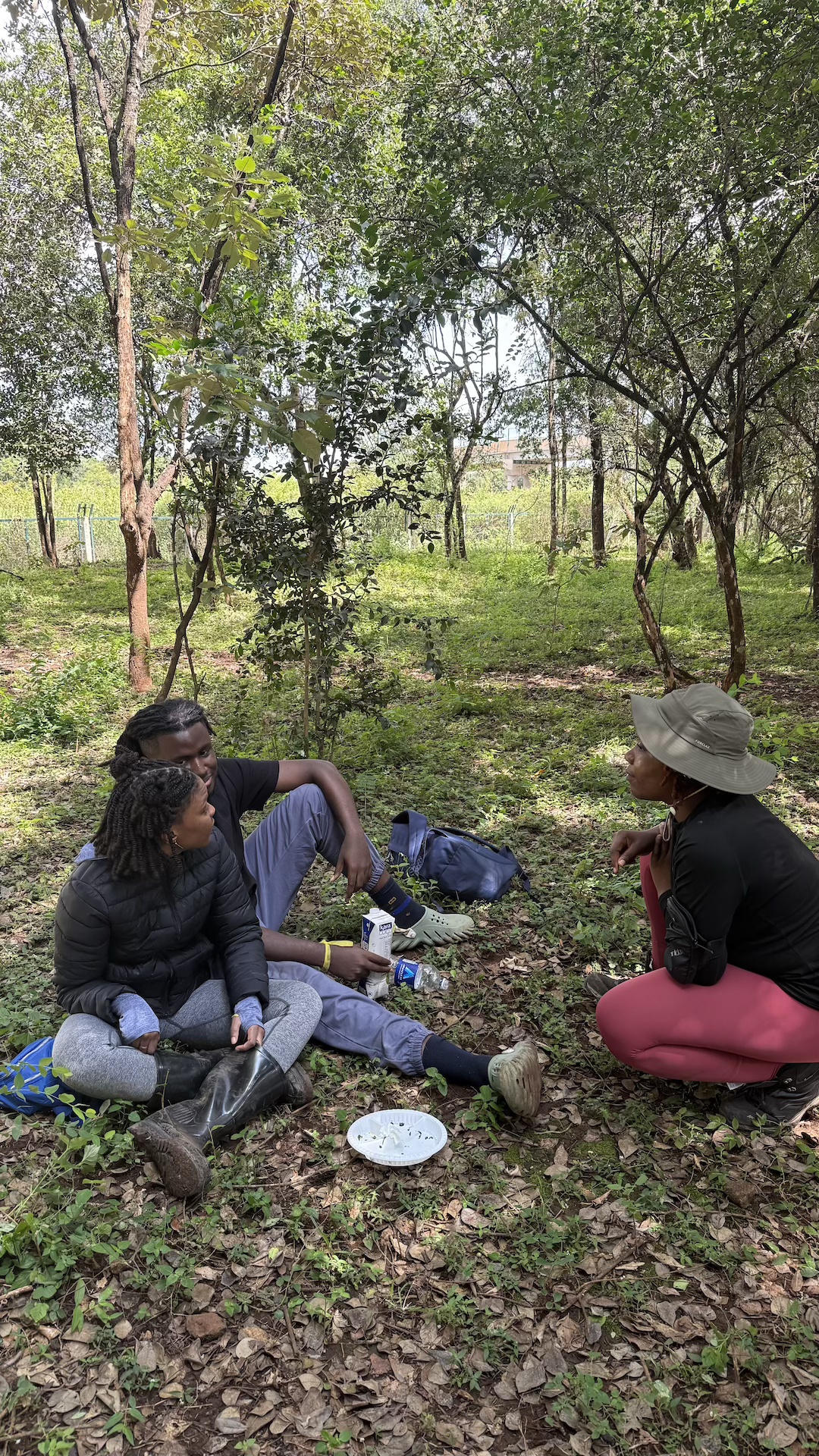
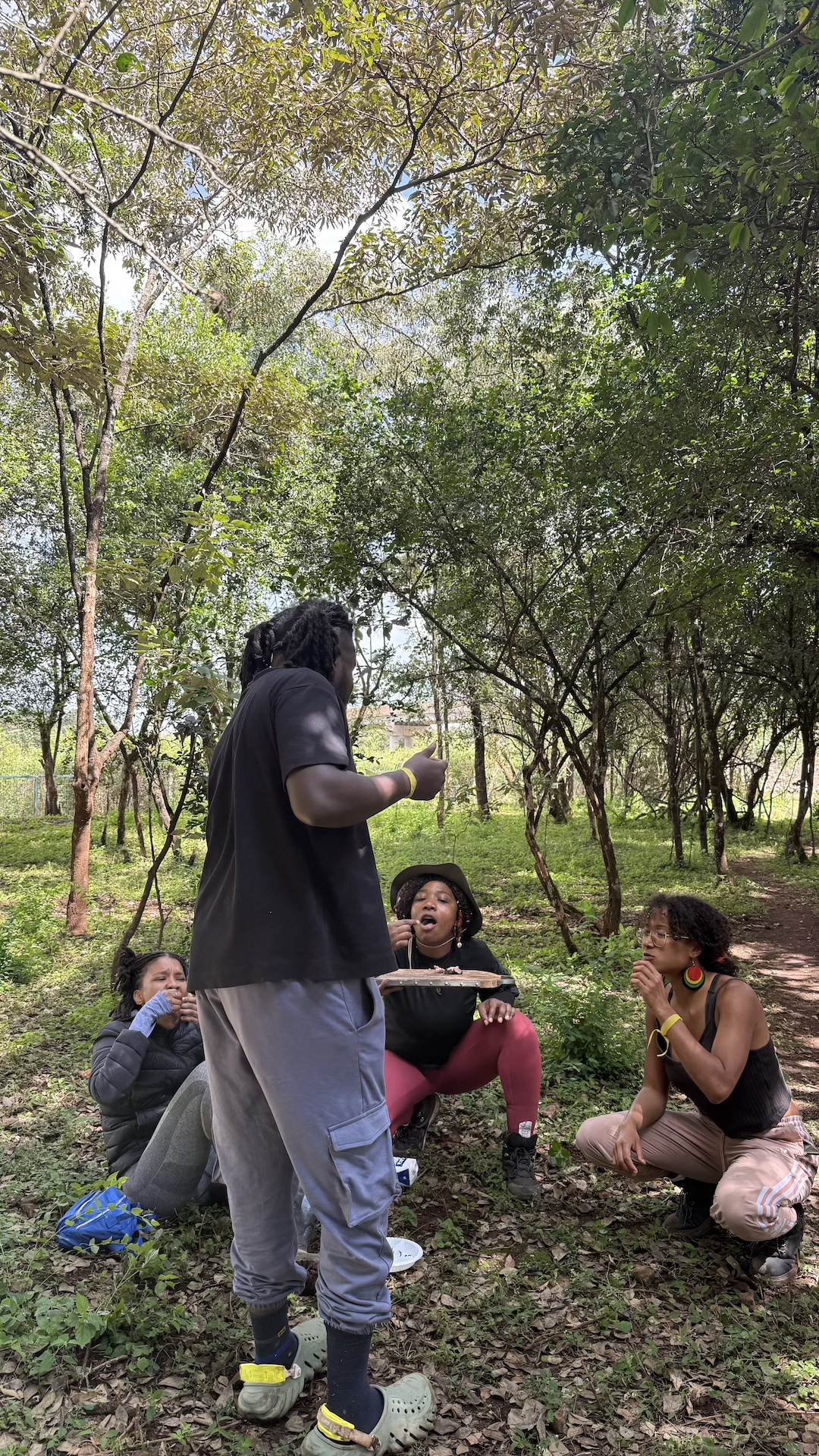
Meanwhile, a few kilometres away near the meetup point, another group of volunteers prepared meals for the community, ensuring everyone shared in the collective reward. At the meetup point, Joy, a volunteer coordinator, greeted newcomers and directed them to the river. Volunteers wore different coloured ropes on their hands—blue for arrivals before 11 AM and yellow for later. The day before, Joy had meticulously tagged the trails with blue ropes, making the route to the river easy to follow.
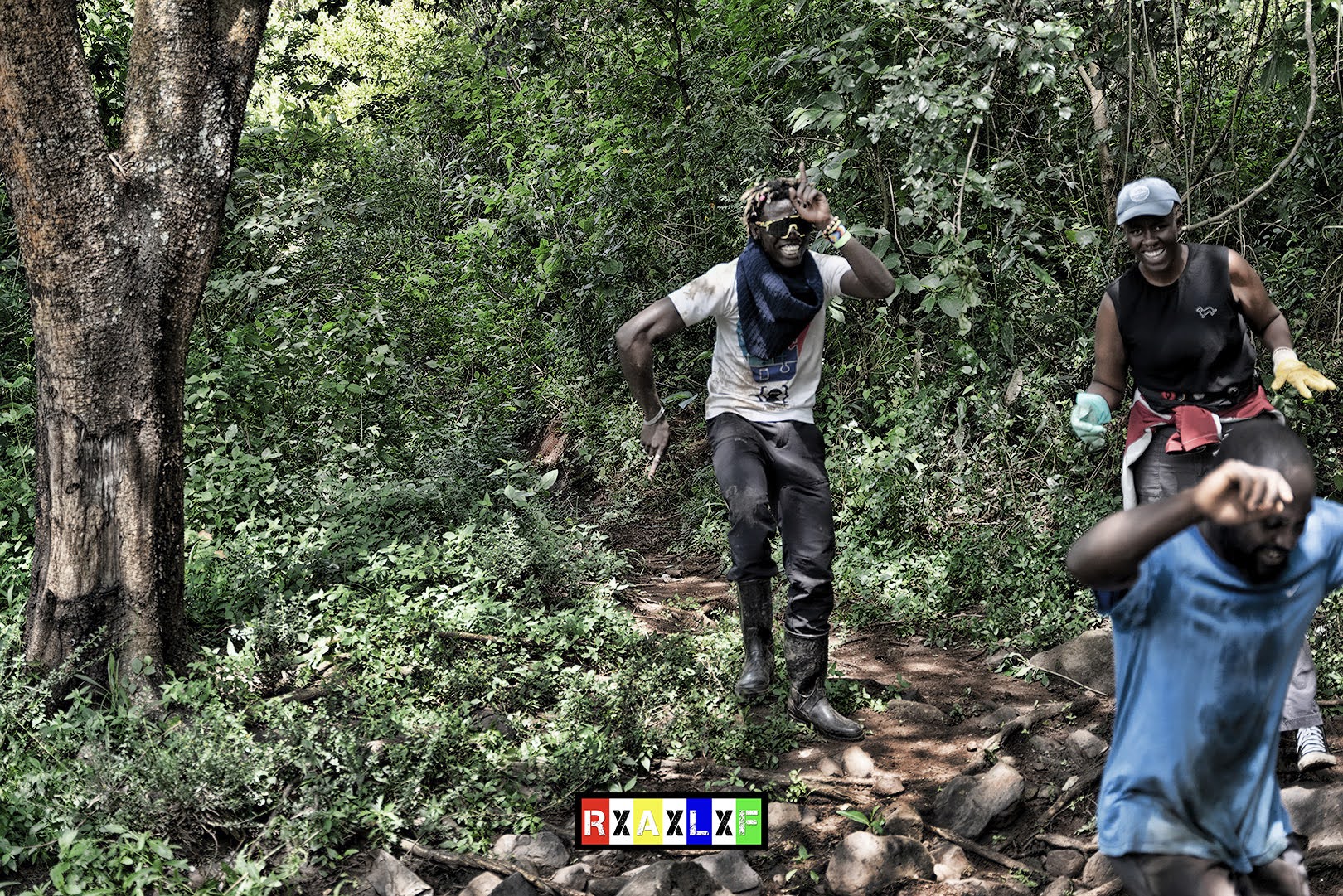
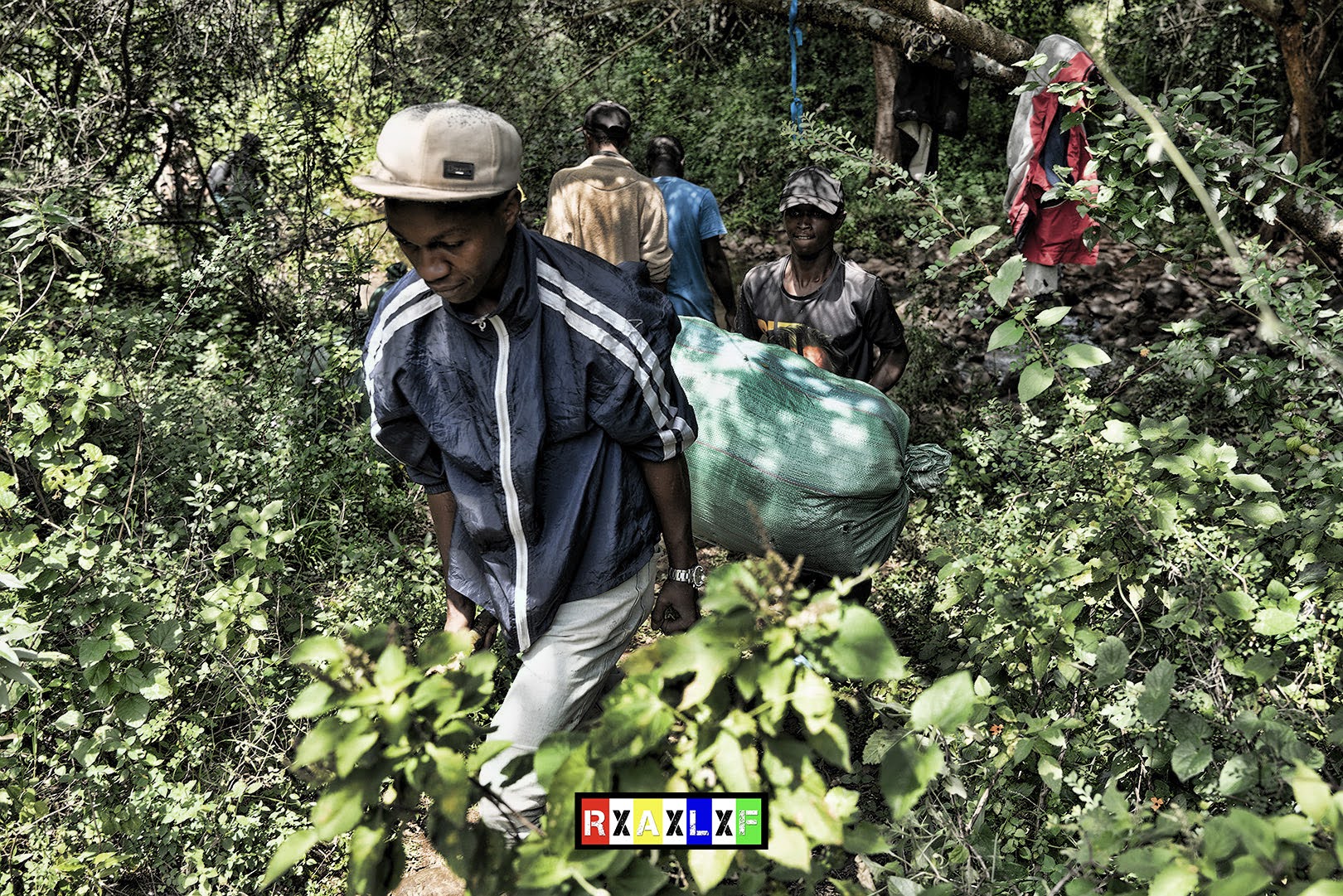
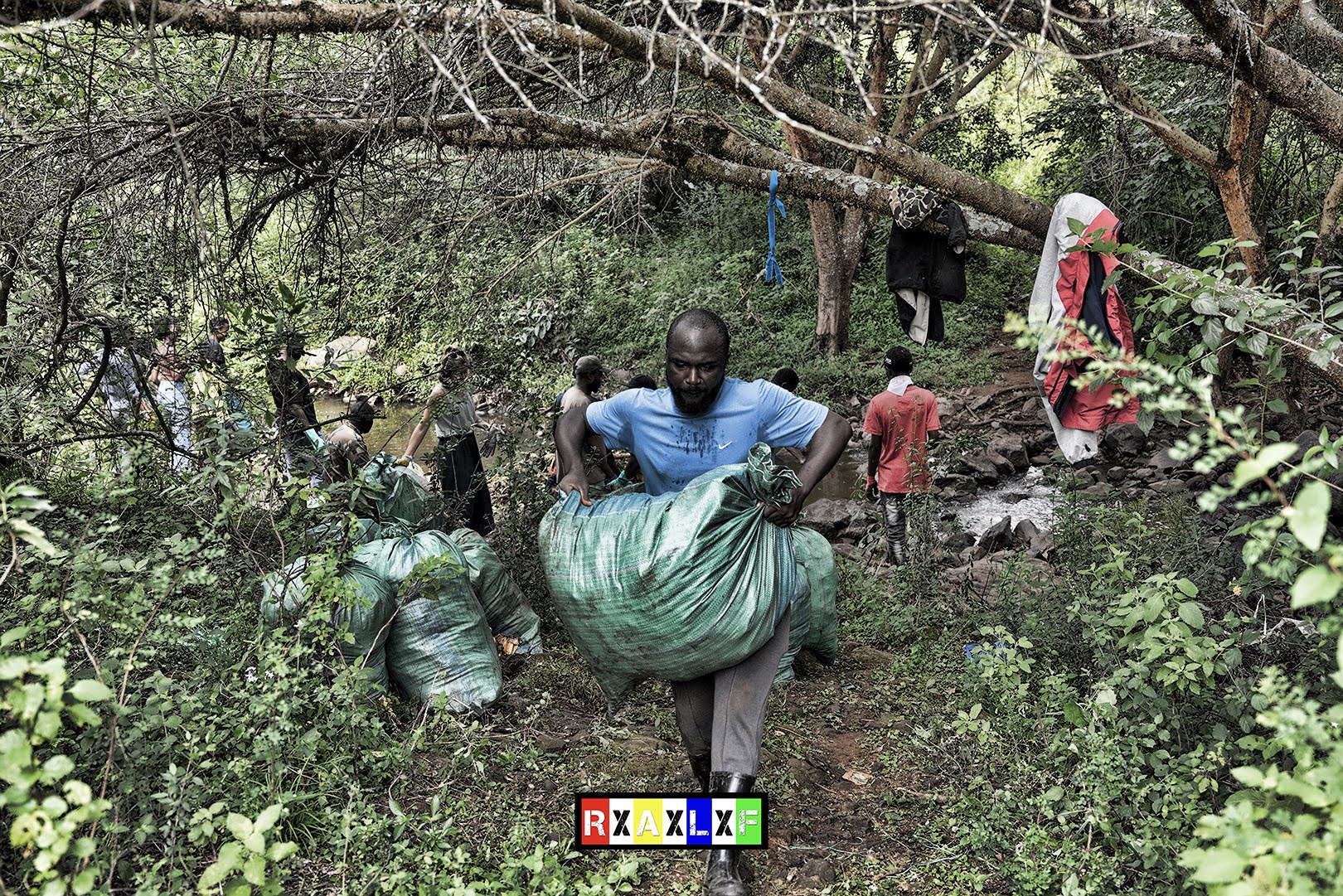
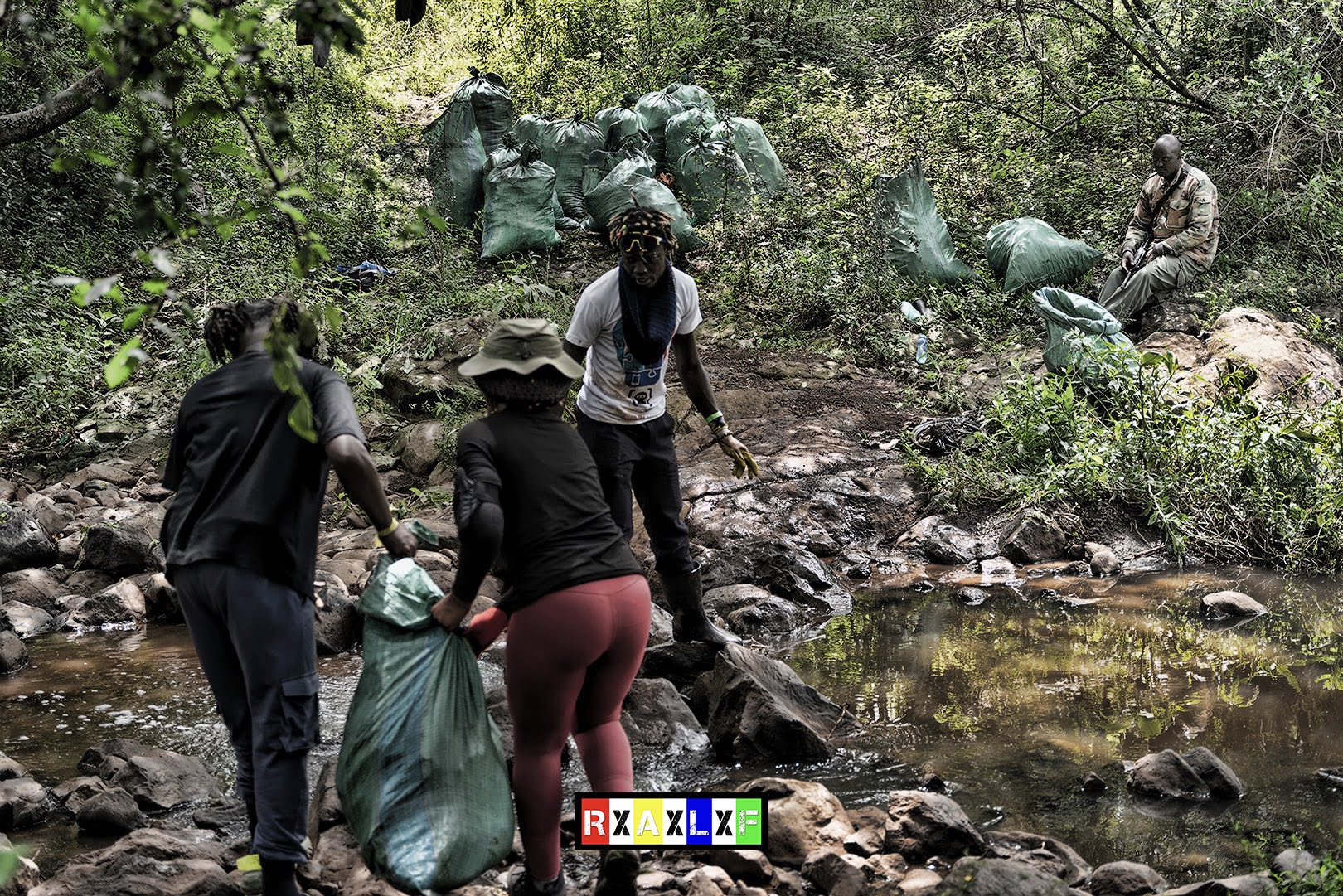
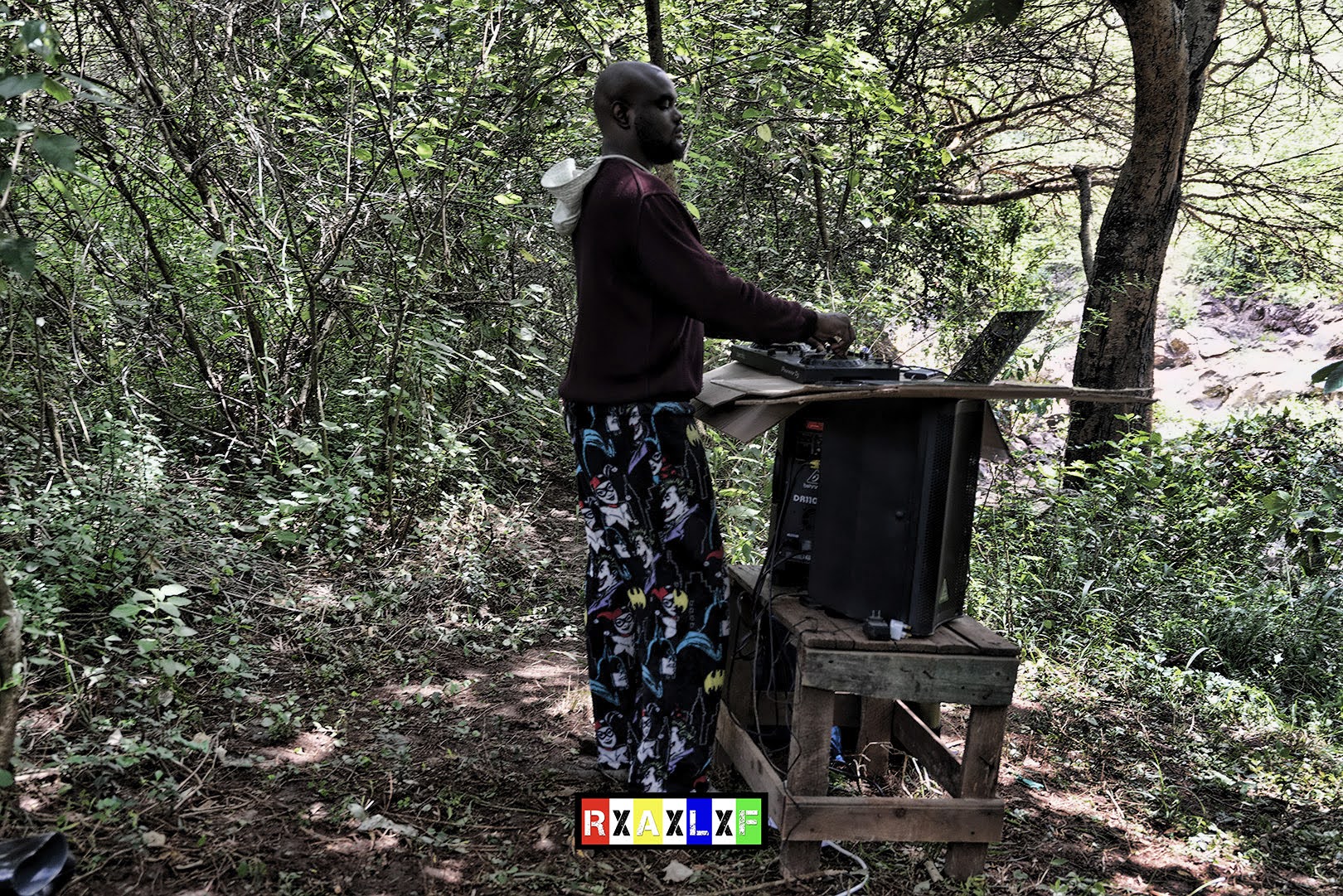
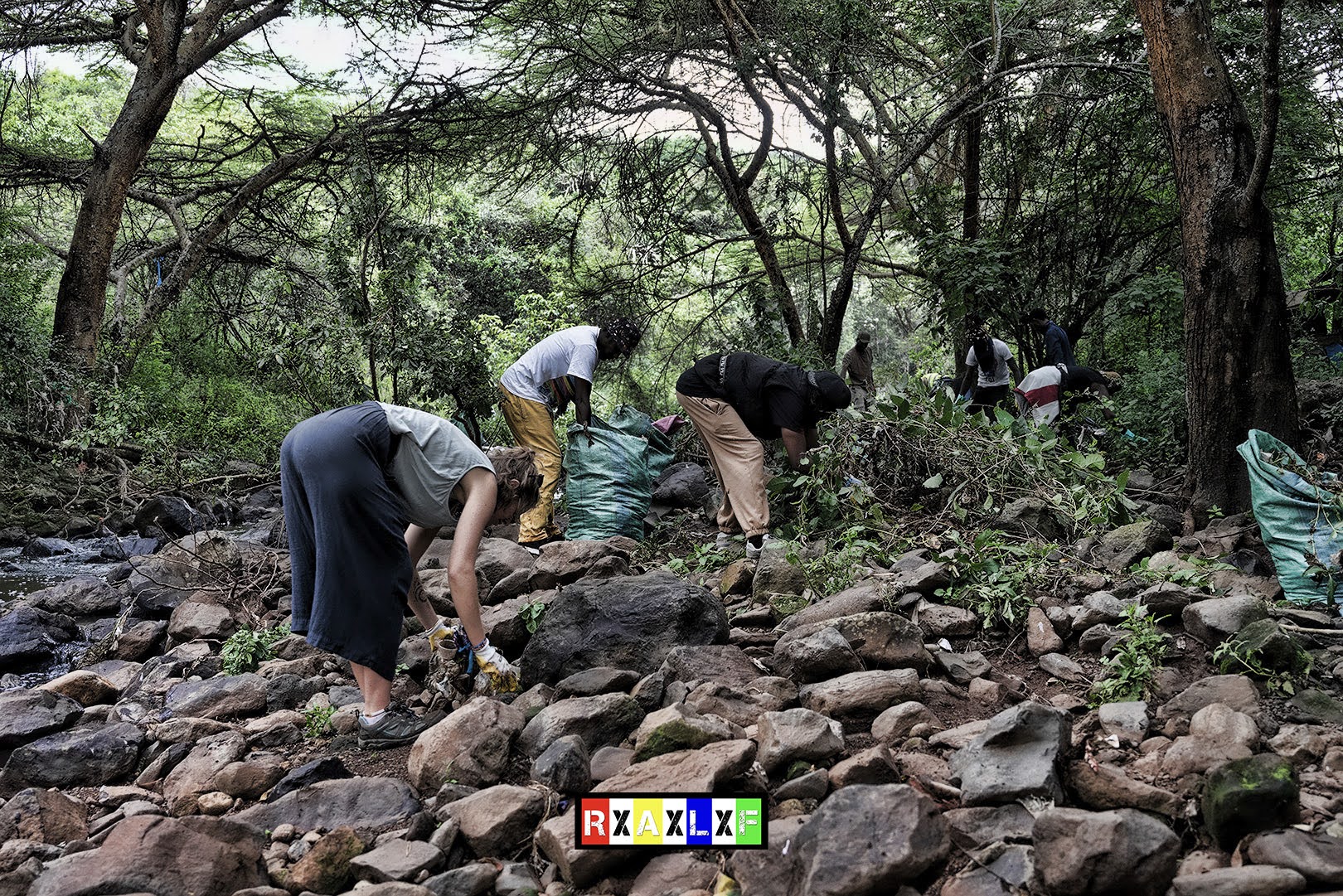
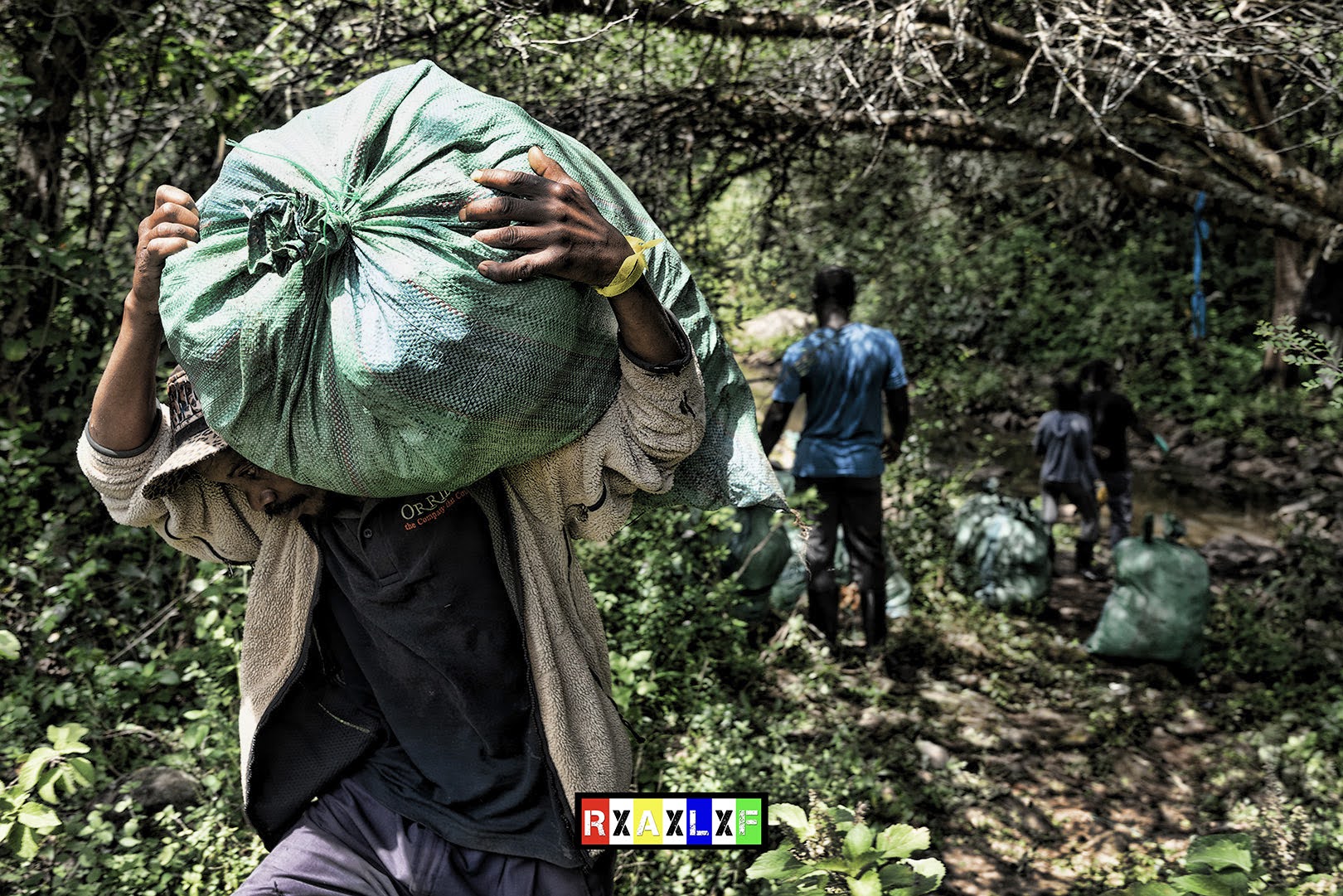
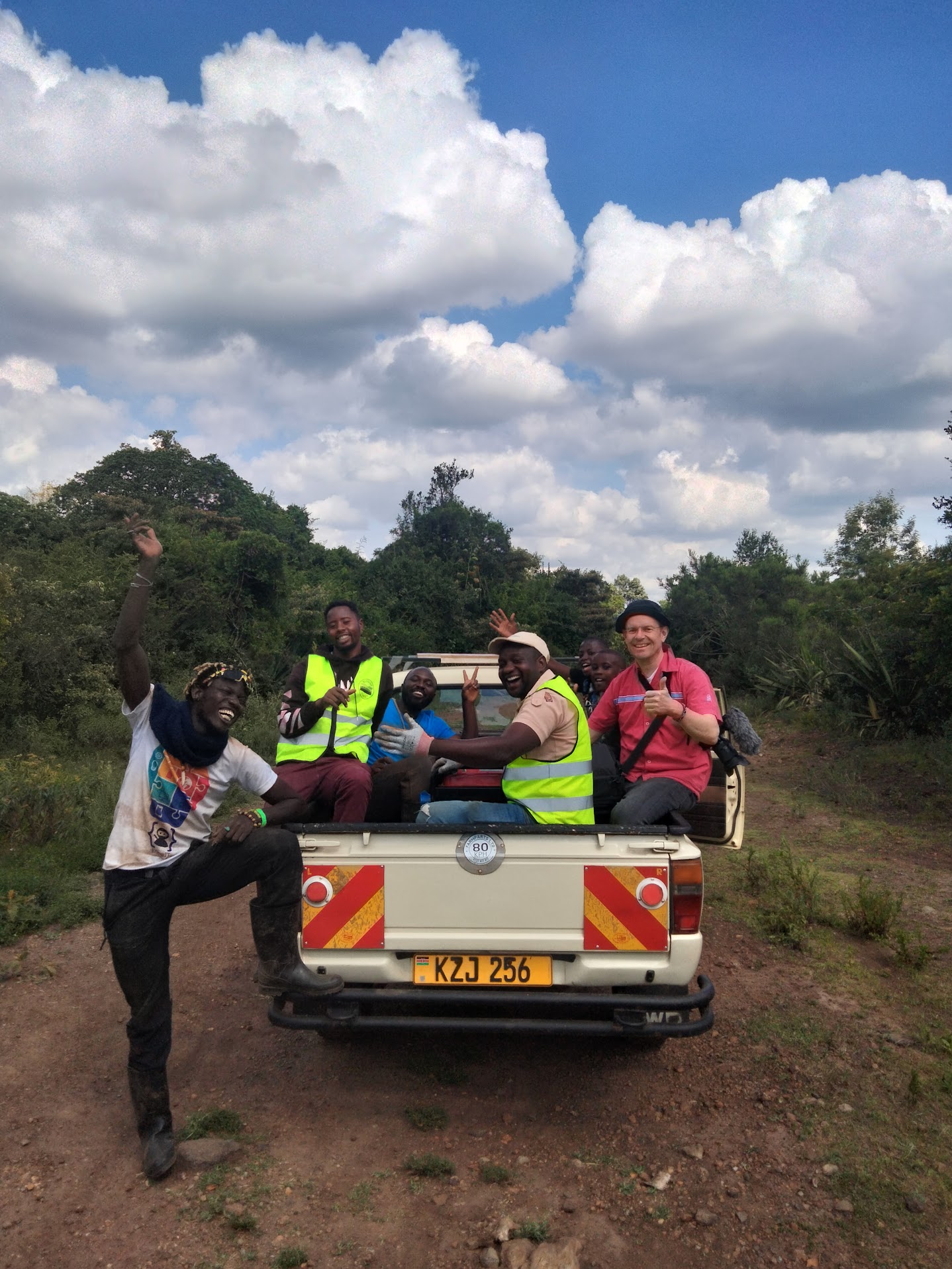
Volunteers worked with gusto, enthusiasm, and vibes, as the atmosphere buzzed with energy. DJ Scalarbane kept spirits soaring, spinning an infectious mix of Deep House and Afro House. I met people I had previously been introduced to and others I had never met—coming from nearby and far away, all united for the same purpose. While volunteers picked, scraped, and yanked mounds of plastic from the earth and hauled sacs of waste from the river, the Ololua Ecotourism Forest Rangers were also around, ensuring everyone’s safety and helping carry bags of pollutants out to the road for transport to Dandora Dumpsite.
The activity reminded me of bees: like workers in a hive, everyone had a purpose, and fit perfectly into a collective effort. In this case, however, there was no queen bee—everyone simply got to work, and, like the bees, there was no slacker here.
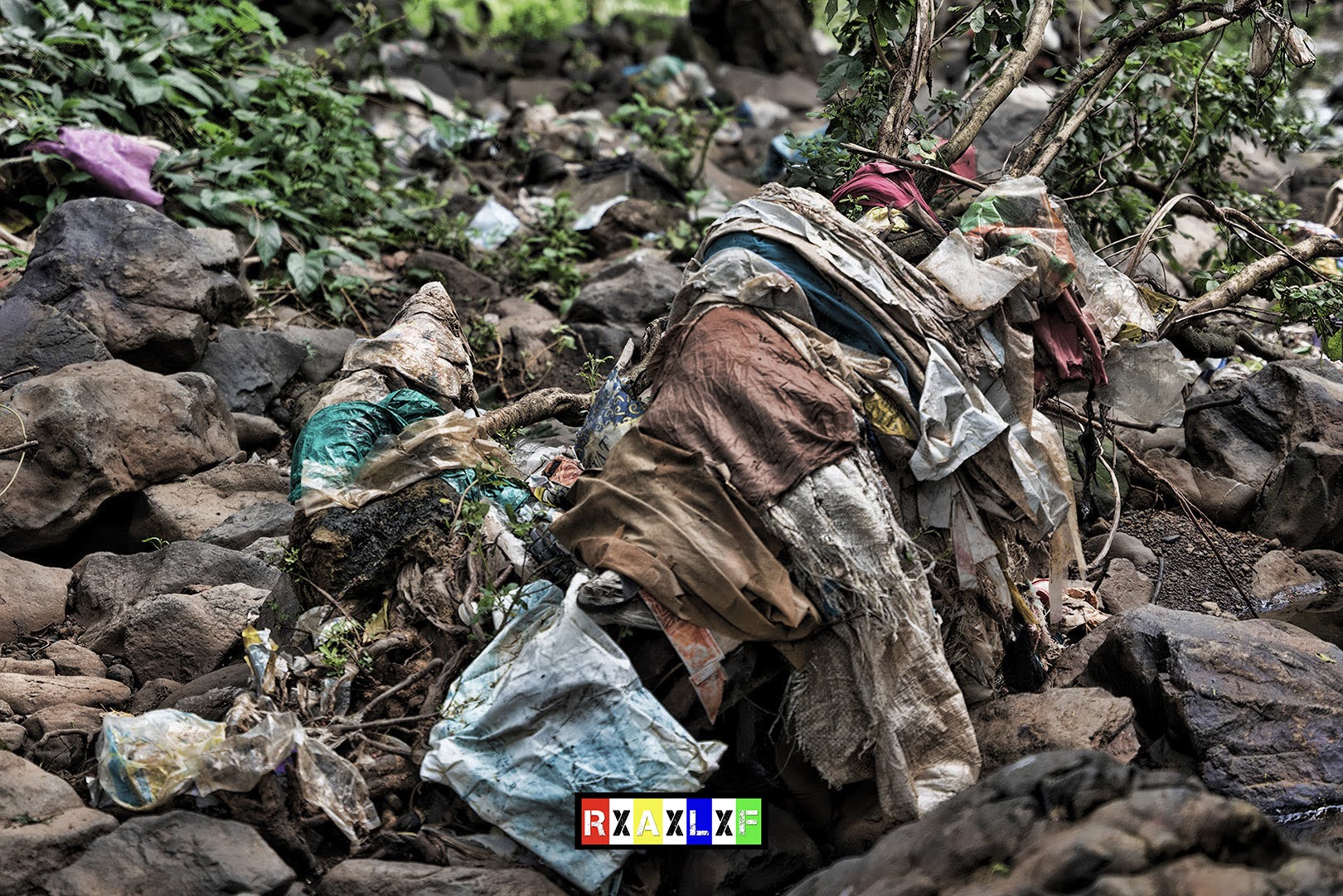
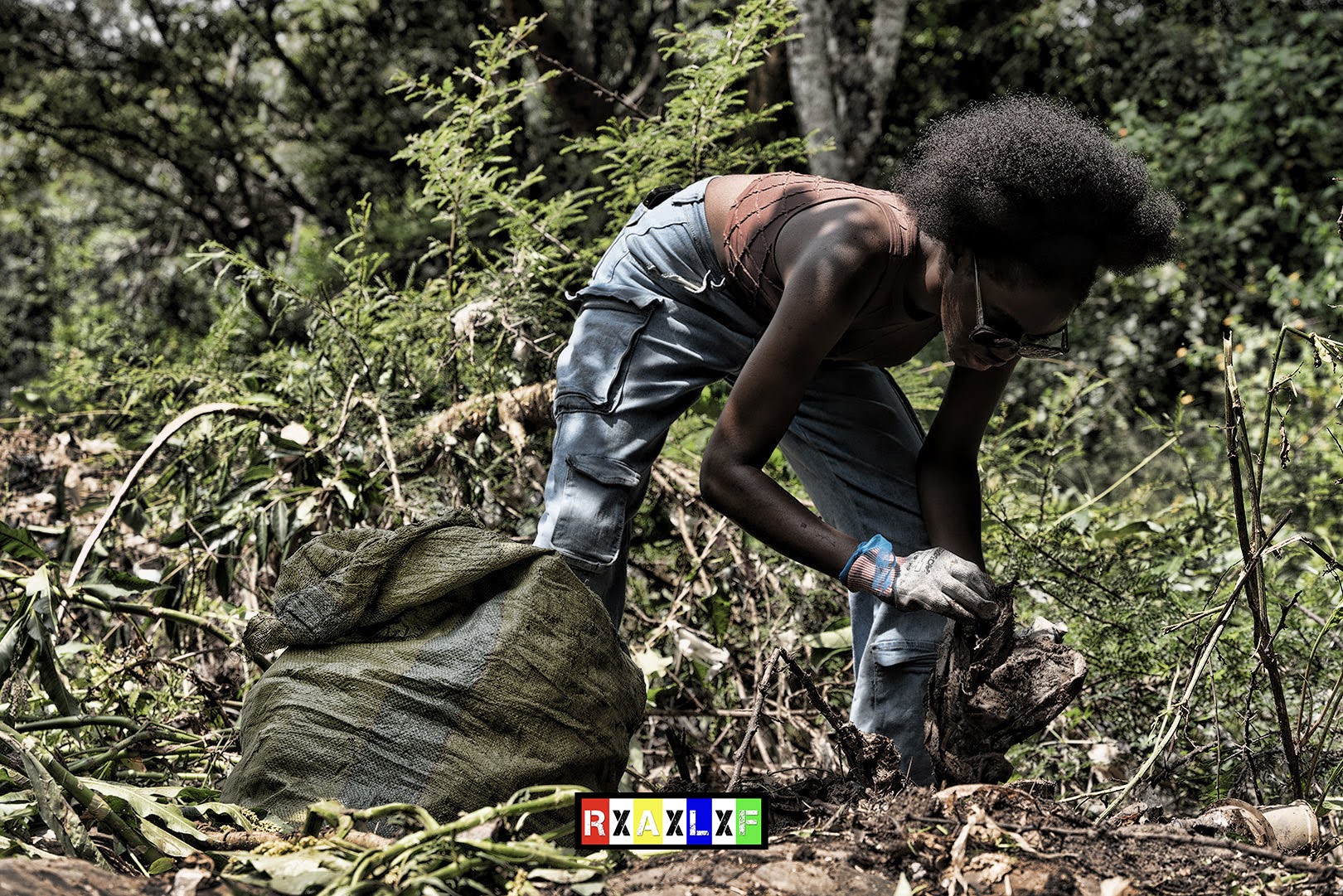
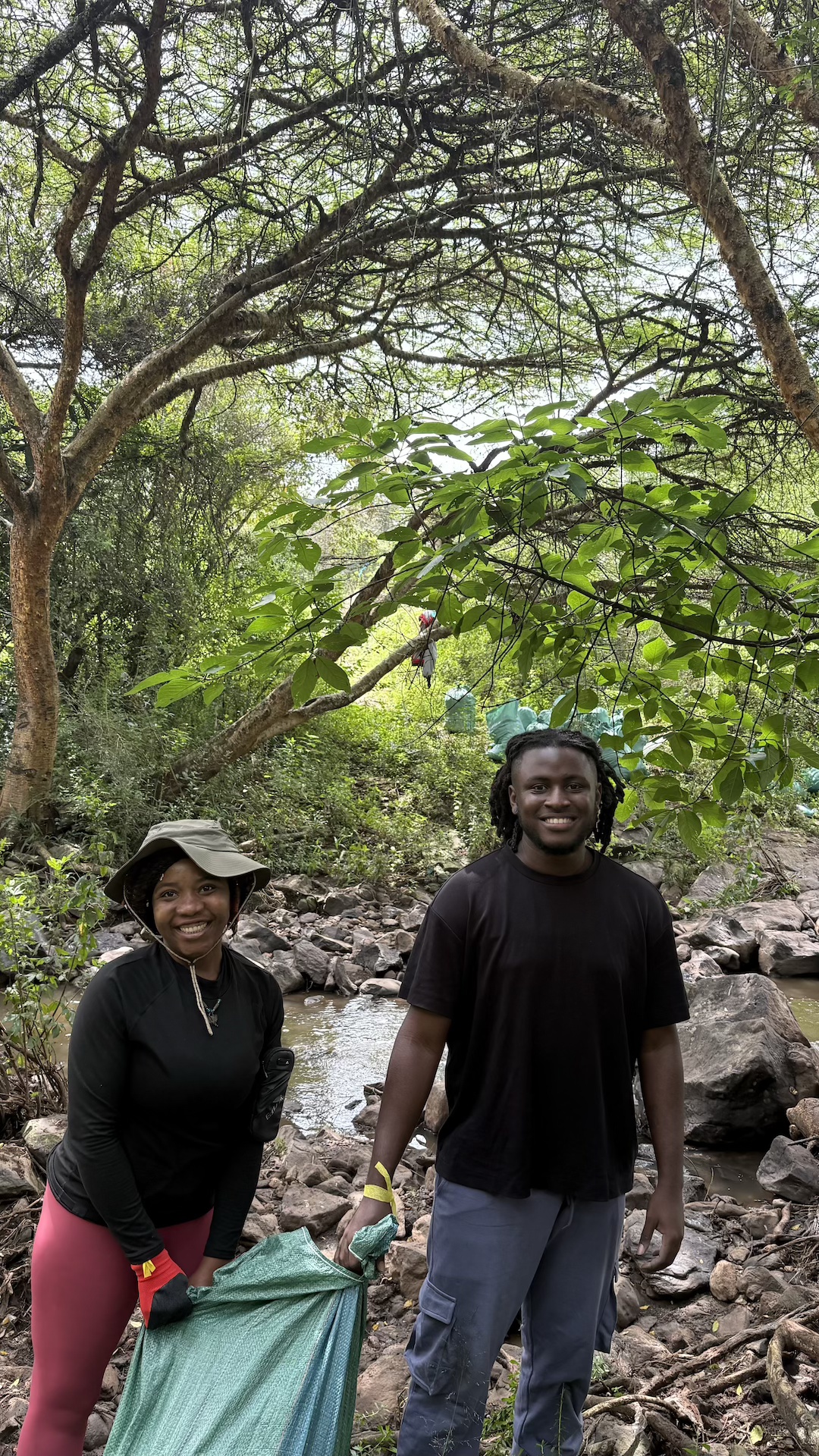
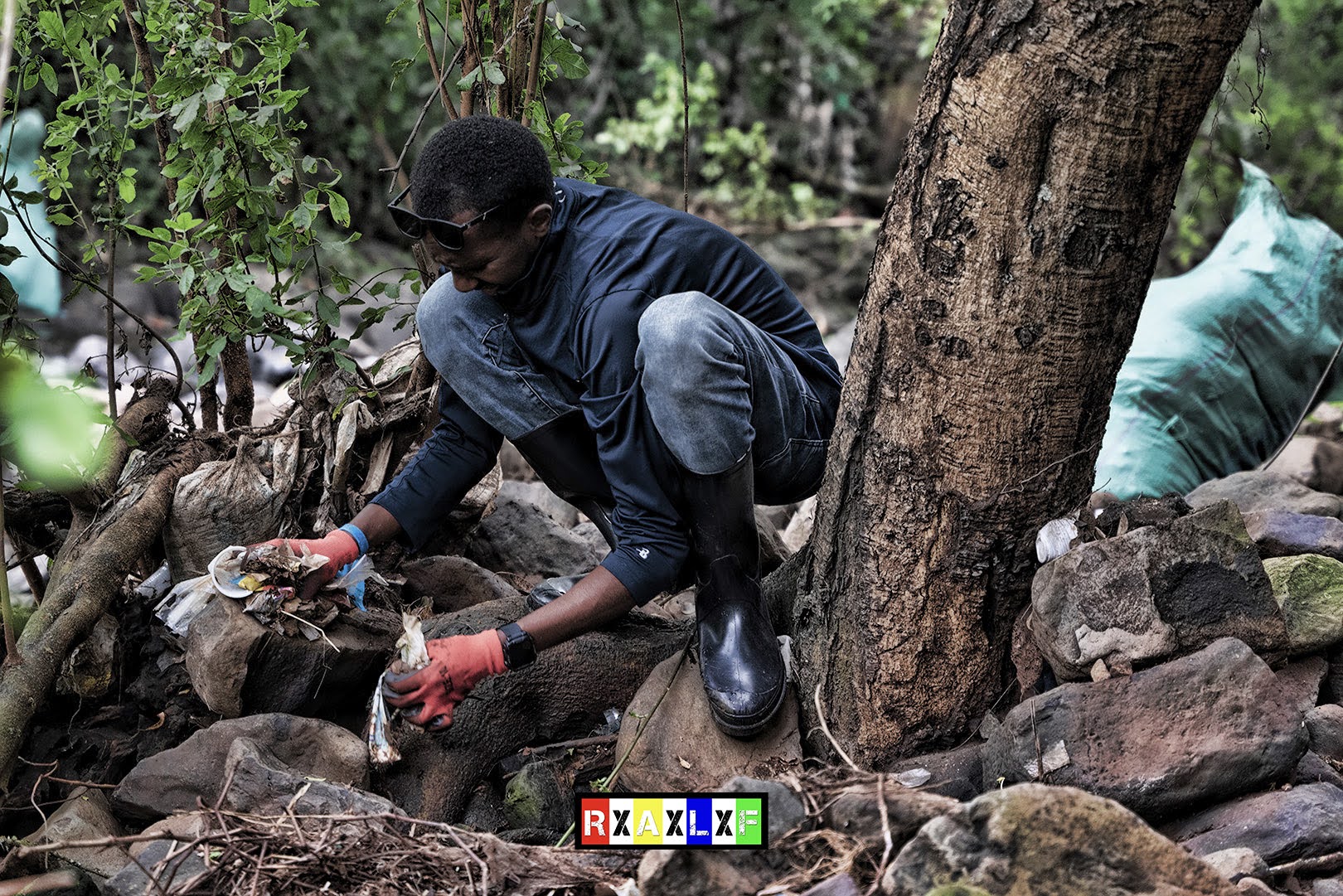
I was curious. As I yanked out various forms of plastic—sandals, polyethylene bags, used sanitary pads, diapers, rubber items, and pieces of clothing—I was struck by how disgusting these pollutants were. Grateful for the latex gloves provided at the start, I still felt moisture seep through my hands. Worlds ago, I would never have been caught dead doing this. I thought about the times I grudgingly followed my grandmother to cultivate her farmlands—I despised that activity. Yet, here I was, willingly engaging in this grim task. Looking around, I wondered what compelled everyone else to join in. Still, I couldn’t help thinking how avoidable this effort could have been if we were more conscious of the ecosystem and intentional about proper waste disposal.
Why It Matters
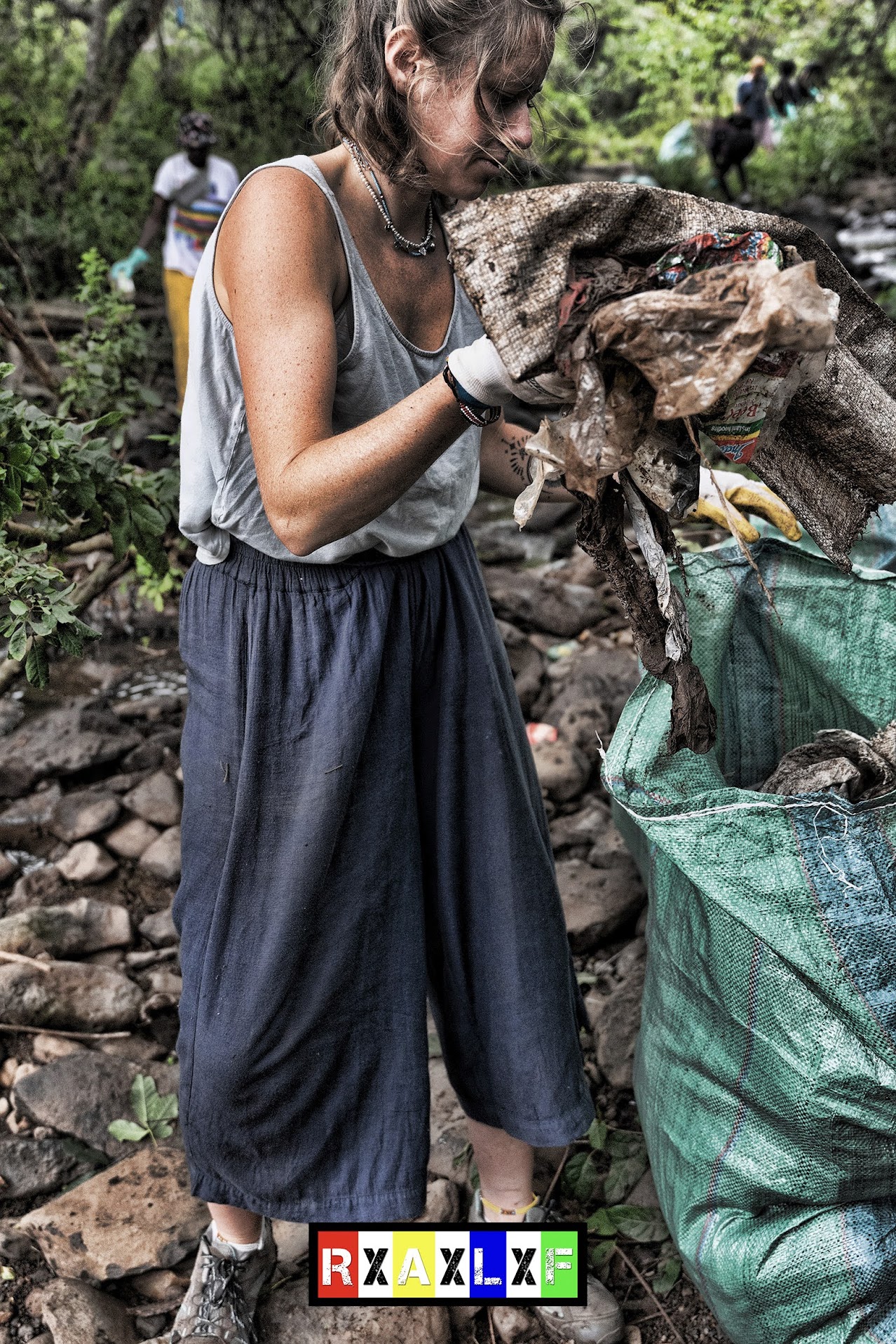
Photograph by RXAXLXF
In her essay, Understanding Sources of Riverine Plastic – The Great Bubble Barrier, Dr. Sarah Walkley identifies several causes of plastic pollution; voluntary and accidental littering, inadequate waste management facilities, and a lack of education about the consequences of improper disposal. Accordingly, trash accumulates. Often, the litter we see in rivers or scattered across various locations isn’t where it was originally discarded. Wind, rain, and other elements carry litter from streets, gutters, and other areas, transporting it far from its point of origin. What begins as a single piece of carelessly discarded waste can travel miles, polluting rivers, forests, and communities in its path.
There is no such thing as ‘away.’
— Annie Leonard, The Story of Stuff
Arinze, one volunteer, echoed this: ‘I think the important thing is spreading awareness like people not disposing of their trash everywhere. Most of the things here are probably from people that threw things into the gutter, into the river, and it ends up coming here—not because they want that to happen, but maybe they’re not well-informed that this is what ends up happening to the waste we throw away. So, I guess more education till they stop doing that.’
Annie Leonard’s iconic words come to mind: ‘There is no such thing as “away.” When you throw something away, it must go somewhere.’ Litter is mismanaged waste, trash, rubbish. Annie Leonard, author of The Story of Stuff, explains in her animated movie that intentional disposal of waste begins with understanding how the stuff we use is made and where it ultimately ends up. Without this awareness, we risk bringing toxins into our spaces as a consequence of failing to properly manage the products we consume.
Rachel, another volunteer, said, ‘Everyone should find a proper way to dispose of their trash. So, instead of dumping it in the rivers, we take it to where it belongs.’ This raises an important question: what is the proper way of disposing of trash and who is responsible for ensuring proper waste disposal? ‘It starts with us,’ says Sammy. However, Arinze highlights the need for systemic support: ‘I think the government needs to provide an alternative. Because if there is a clear, easy way to dispose of waste, people won’t dump things in the river. So, it’s a two-way thing.’
For Katie, the message is crystal clear: ‘Our children are gonna inherit this. We also share this planet with so many other creatures, and the waste we produce is really harmful for them.’ Katie’s words encapsulate the heart of EcoRave’s mission—a call to action for the present and a legacy for the future. She continued, ‘If we could all just make an effort to reduce our waste, recycle, and join initiatives like this one, we’d be helping all the other creatures on earth—and also our children and grandchildren.’
Kangumu
Discussing how to spread awareness about environmental responsibility, forest ranger John Mbogua used the analogy of kangumu, a Kenyan snack, to illustrate how small actions can contribute to a larger impact. ‘Let’s say, like, kangumu—you eat what is inside, but you throw the paper. So we should try to eat what is inside and also take care of the outside so we don’t damage the environment.’
John’s role as a ranger for the Ololua Ecotourism Forest makes him a vital authority at the grassroots level, dedicated to protecting Kenya’s natural spaces. I wondered how effectively his message of proper waste disposal would resonate with the locals. As a local himself who is deeply connected to the forest, would his voice naturally carry weight and would the community hear him? When I asked him what he thought about the cleanup, he replied, ‘We should take care of our rivers because it’s only us who pollute the river, and it’s only us who come and collect that damage.’
John Mbogua’s words reminded me of the Igbo adage, ‘Ozi adịghị nwata mma, o je ya nje na abụ.’ When you dodge responsibility, you end up with more work. Ultimately, it is humanity, not other species that will shoulder the responsibility caused by avoidance of responsibility. Humans do have a responsibility to the environment, and when we are not intentional about preserving our natural spaces, we not only harm our environment but inevitably have to return later to undo the harm we caused.
Harvesting Plastics
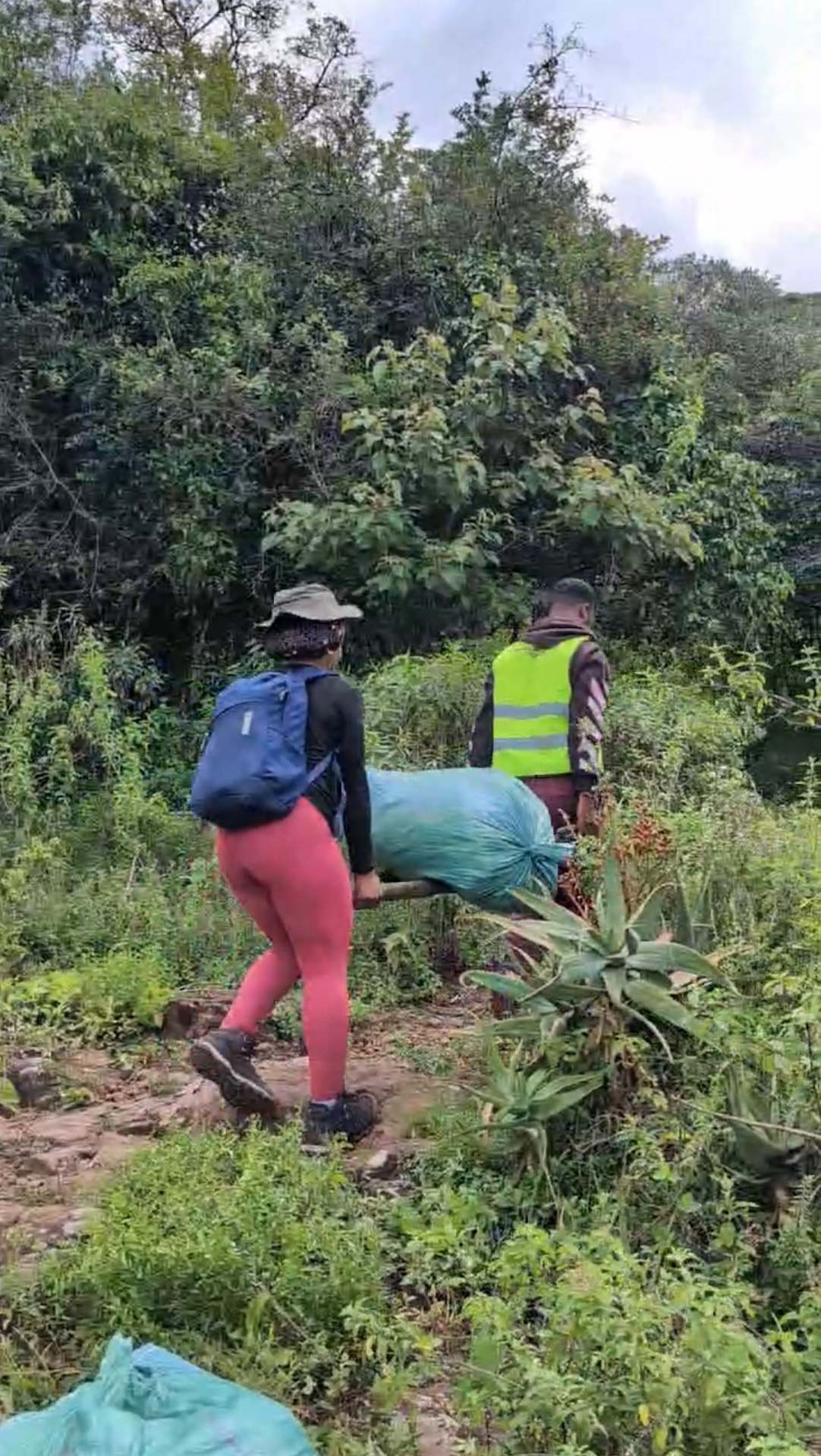
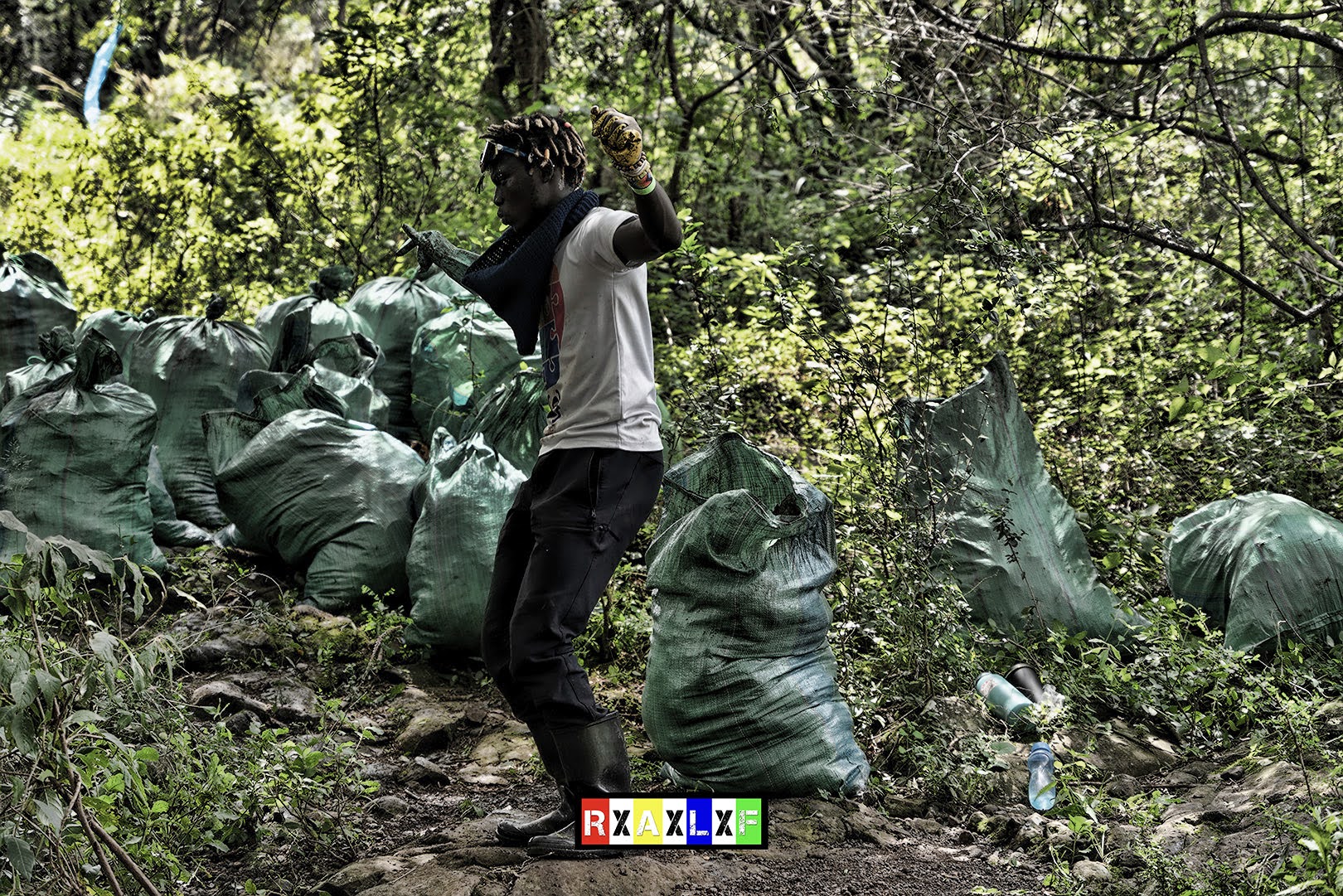
Photograph by Michael Shumaker
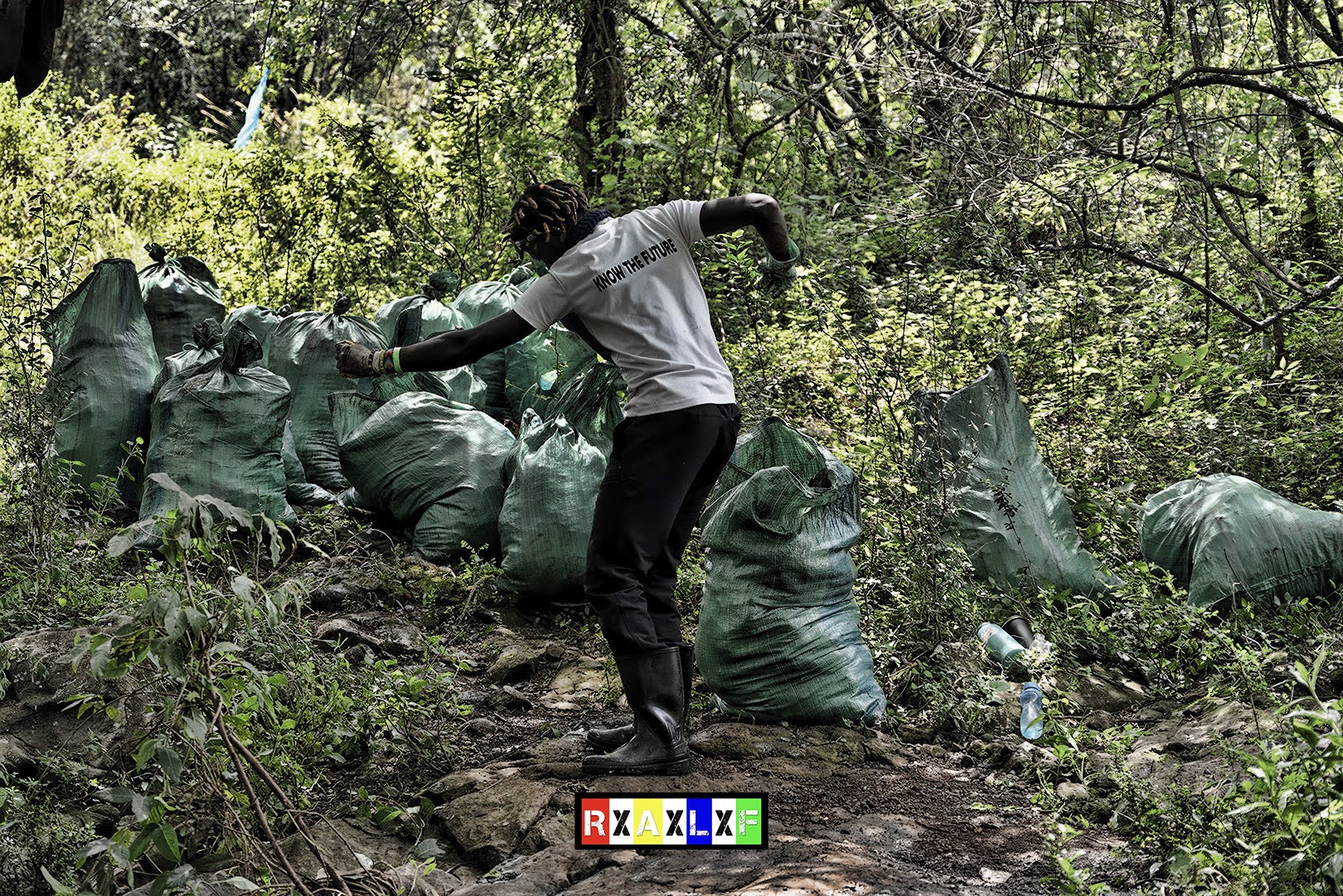
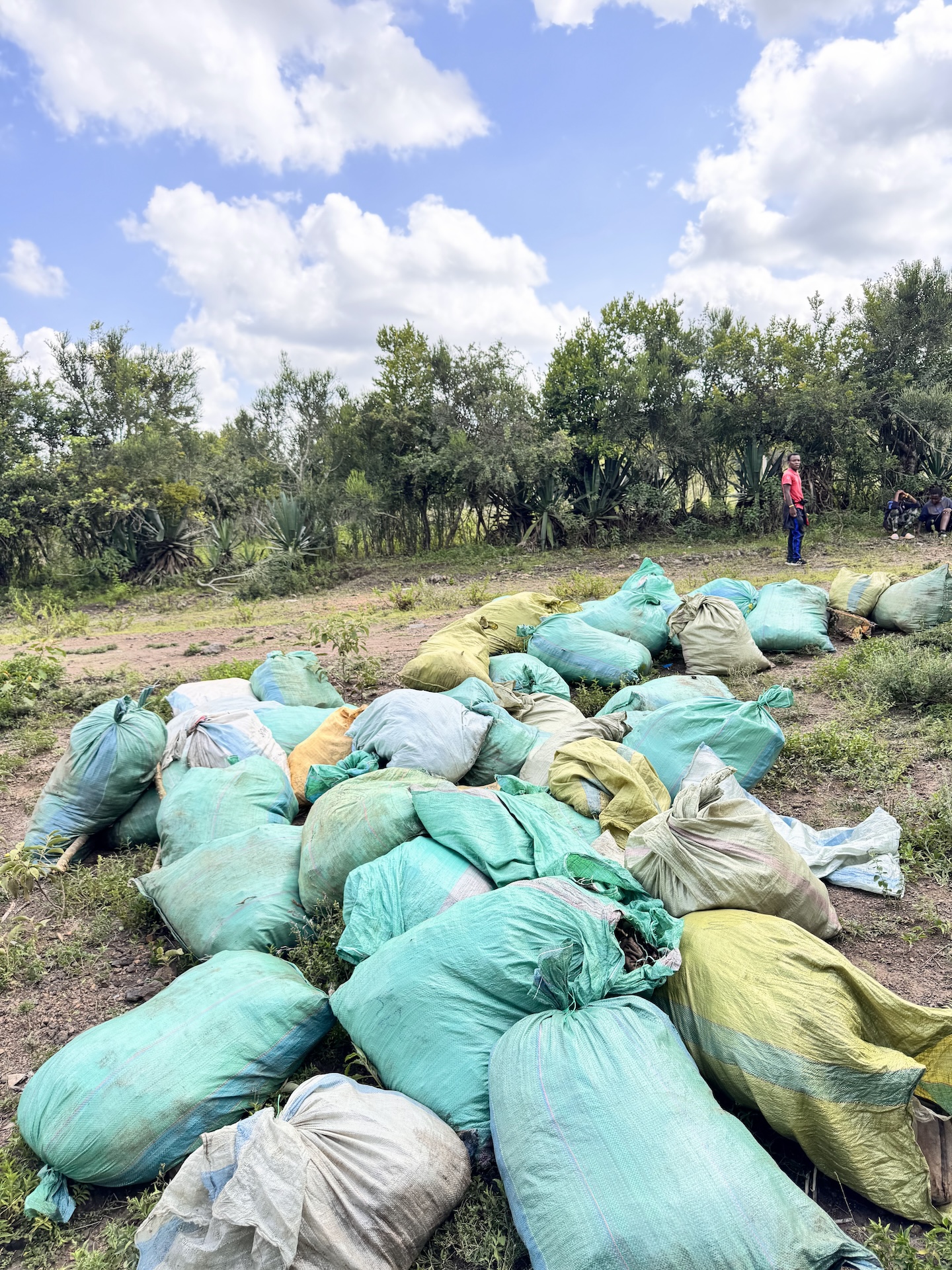
Sammy’s words carried a quiet power: ‘Uh, I’d say today we are harvesting, and, as you all know, we go to the farm to harvest fruits from the trees. But today, we went to harvest plastic from the trees, meaning that we have been planting the wrong seeds.’ His words struck a powerful chord. In just a short stretch of the river, over 50 bags of waste had been collected. ‘That shows how we humans have colonised nature. It’s not good, and it’s upon us to do what we have to do.’
For Sammy, the cleanup was both a reckoning and a call to action. ‘It starts with you,’ he said. ‘It starts with me, it starts with us,’ I echoed, reflecting on the weight of his words. The term ‘colonise’ lingered in my mind. ‘I hope next time, we’ll be harvesting fruits and such,’ Sammy added, pulling me from my thoughts.
The Ripple Effect
The cleanup at River Kandisi might seem inconsequential, like how could forty-one people from different backgrounds come together and create meaningful change, and what does it matter in the grand scheme of things?
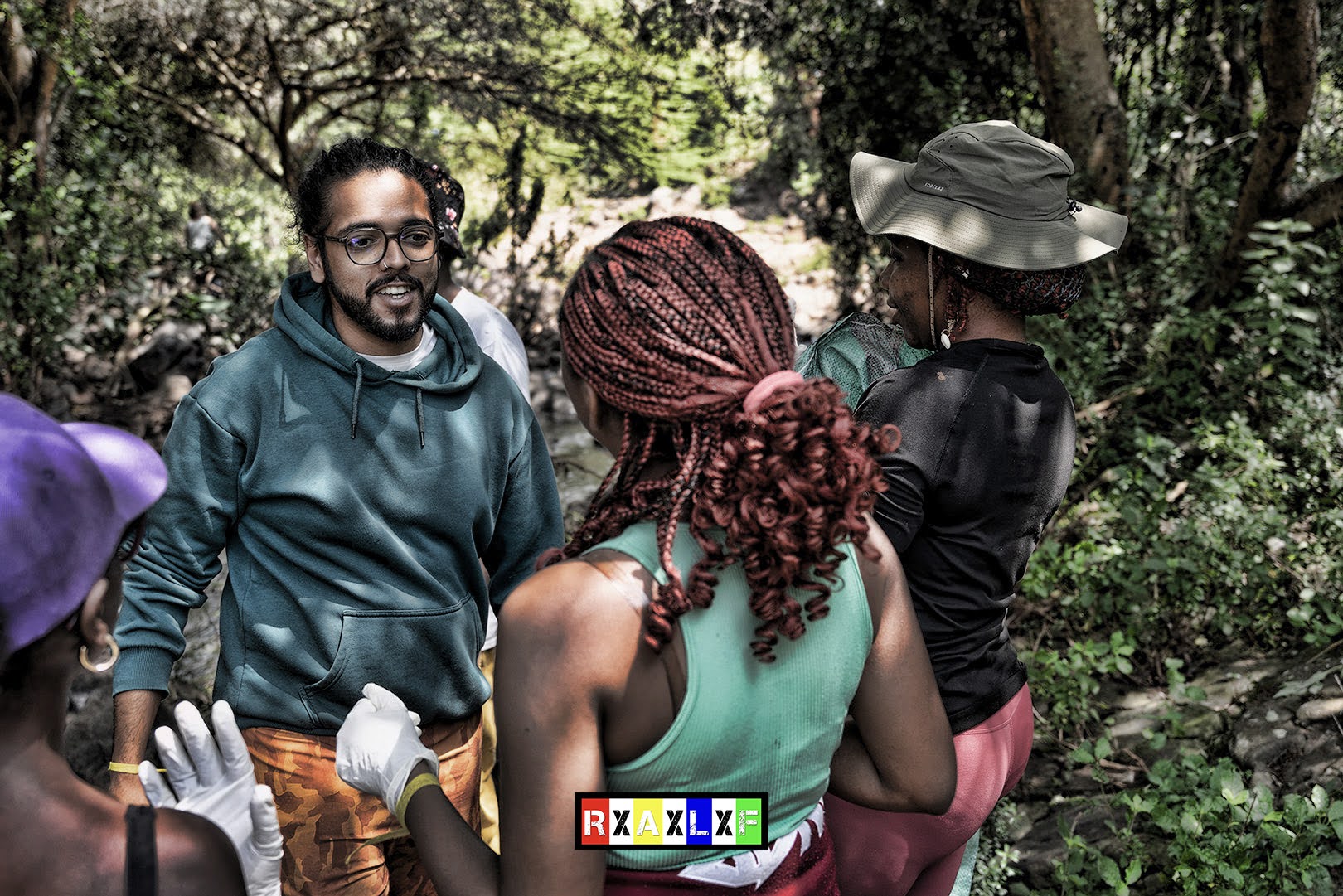
A lot, says Akash Gahuri and Gideon Oladimeji (DJ Scalarbane). Akash reflects, ‘I think it’s a very tiny drop in the ocean, but it’s an effort nonetheless. I felt good doing it, and I think more people should do the same.’ Gideon adds, ‘I think the fact that we share a common goal is a place to start. Finding people that want to do the same thing as you in one way, like that. Look at everybody here—they’re passionate about making the earth a better place. You know, even though it’s a little bit of a thing that we did on the grand scale of things, it still matters.’
Coming all the way from Berlin, Deolu admitted he didn’t consider himself a nature lover before the EcoRave. ‘I didn’t put myself in it that much for me to like it, but it’s a very good way of clearing my mind,’ he shared. Deolu joined not only because Biodun invited him, but also as a way to give back. When asked whether he felt it was his business to partake in the EcoRave, despite being neither Kenyan nor from Ngong, he replied, ‘Yeah, maybe. I just wanted to, like, yo—he’s my friend. He’s taken me on a lot of hikes, so it’s cool. If he calls me, to be honest, that’s all we are—we’re there for each other. So, if he calls me anywhere… all of us came here to Kenya for him.’ Deolu’s response highlighted the power of friendship and shared purpose.
For Edwin Nyakairo, also known as Benji, the cleanup was about fostering teamwork within the community. ‘This is how we bring people together, and then they learn how to clean the environment and do proper disposal,’ he said. His cousin, Ian Momanyi, who was grilling choma alongside Benji, echoed this sentiment, adding that the event taught him how to care for the environment.
For Joy, the initiative symbolised harmony: ‘When you’re in the forest, you don’t think about “this tree is more important than the next tree.” They all make up one big forest, and it’s just beautiful. It flows. It doesn’t matter whether your role is big or small. Provided you show up, that’s enough. You’ve done your part. Even if you pick two pieces of paper, your work is just as important as someone who picked ten, twenty, because you came, contributed, and created a change.’
Joy continued, ‘The other thing that motivated me is I love nature. I want to keep nature alive, and I want to take care of it. Chidi reached out and he was like, ‘Do you want to be part of my vision? My vision is, this is a beautiful river that I want to clear up and create a beautiful space for it.’ And I was a hundred percent in. I didn’t even think about it. I love plants and nature, and I believe everyone should care about nature as much as the next person. The fact that nature is very grounding and very calm and… it just flows.’
When We Work With Nature
On 20 December 2024, the EcoRave website launched. On the same day, a WhatsApp group was created, and volunteers began joining to indicate their interest. Simultaneously, different volunteers took the lead in coordinating various aspects of the event—it was the most organic teamwork I’ve ever seen. When we come together under one goal to work with nature, we work with God.
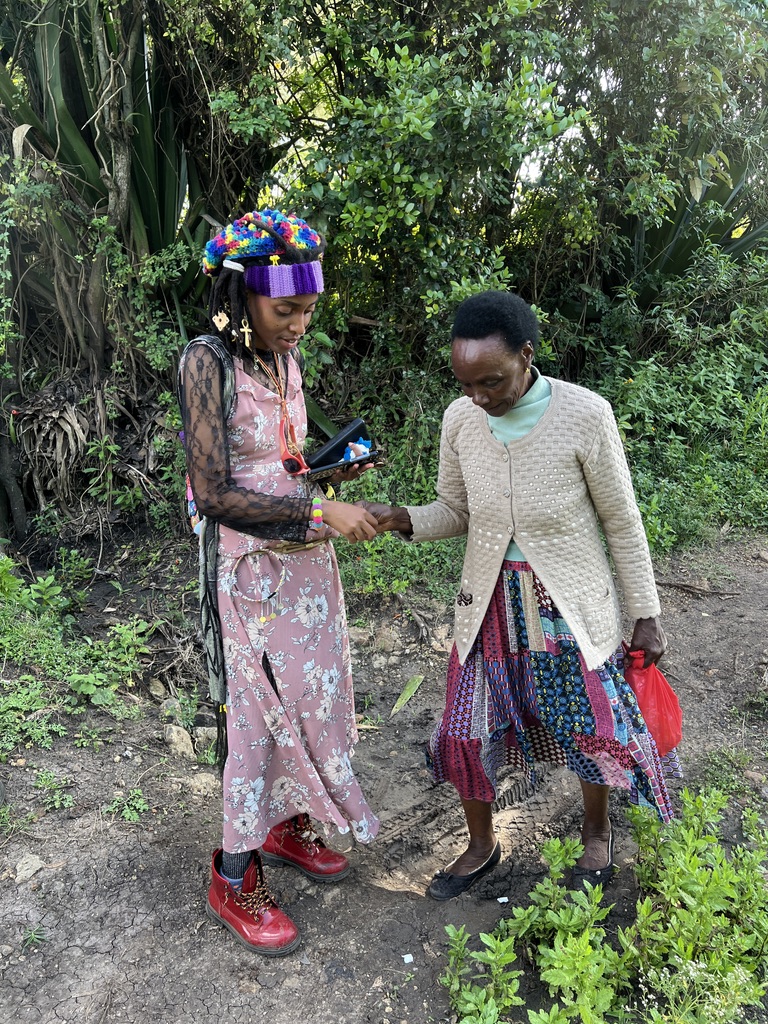
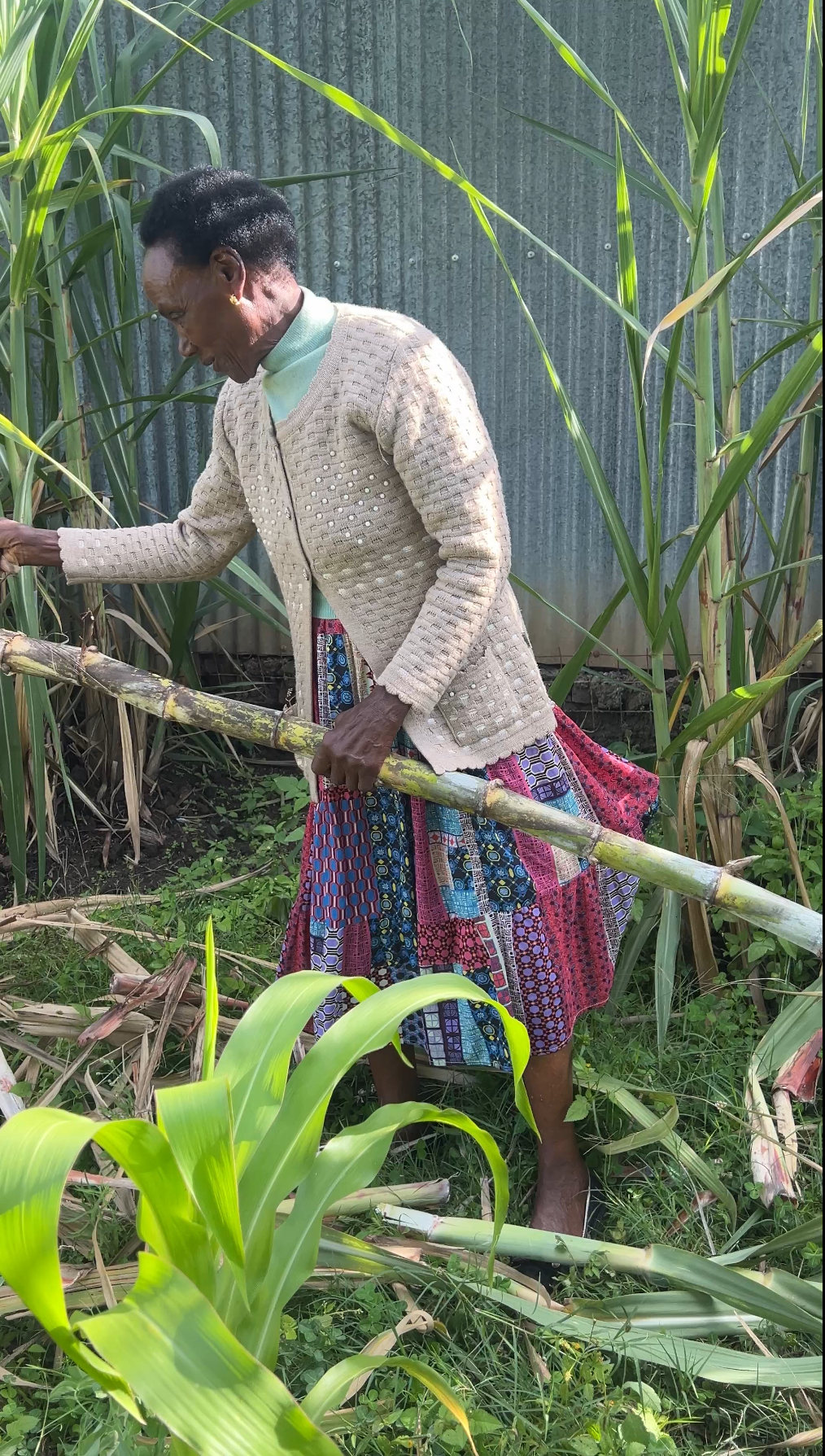
And why not? The ripple effect expands. On my way to the food station where meals were being prepared for the eco-heroes—a term we coined for the participants—I met an elderly woman who spoke Kikuyu to me. Although I didn’t understand, her gestures suggested I take a different path because the road I was on was muddy and challenging. Later, after the food was served, I saw her again while interviewing Joy. Again in Kikuyu, she spoke to us, and this time, Joy translated her words. The elder was overjoyed with the cleanup and wanted to thank us by offering sugarcane. Her gratitude was palpable as she animatedly expressed her thanks throughout the journey to her house, appreciating the eco-heroes for their work.
Does it matter in the grand scheme of things? Absolutely. When we work with great intention, our efforts ripple far beyond what we initially envisioned.
We can sense something has shifted in our attitude toward the environment. I use ‘we’ carefully, but I feel it in my conversations with the EcoRave volunteers. Almost a month later, the WhatsApp group is still here, and photographs and messages of solidarity are being shared. I am more conscious as I move about my daily activities, with my sense of smell feeling more heightened. That day, as the river flowed, cleansed of its trash, we felt a stirring in the air.
The River Kandisi cleanup was not just about that single day of action; it was a seed planted in the soil of collective consciousness. Though the project concluded for 2024, it sparked a wave of environmental awareness and responsibility among the volunteers and the Ololua community. Volunteers became custodians, the community grew more mindful, and, perhaps, in some small but profound way, the tide of environmental apathy began to shift. Biodun’s mantra echoed in my mind: ‘Trash is there; let’s remove it.‘ And Sammy’s words concluded it: ‘I hope next time, we’ll be harvesting fruits.‘ Because when we work with nature, we plant the seeds of good fortune—for rivers, for forests, and for ourselves.

Creatives Around Us granted permission to feature photos by RxAxLxF, Adeolu, and Ifunanya.

 Creatives Around Us